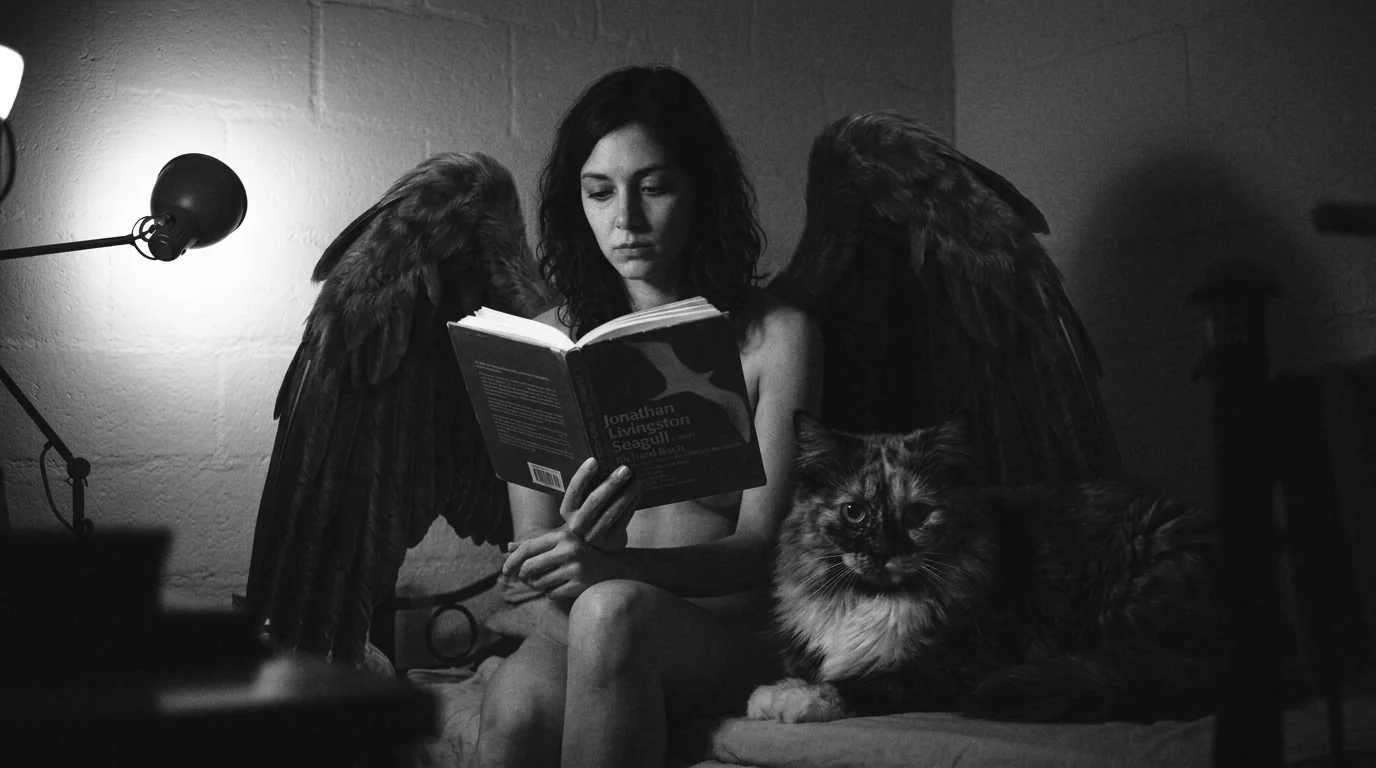
She reads beneath folded wings while the cat keeps watch beside her, both of them suspended in the soft silence of a room that feels slightly removed from everywhere else.
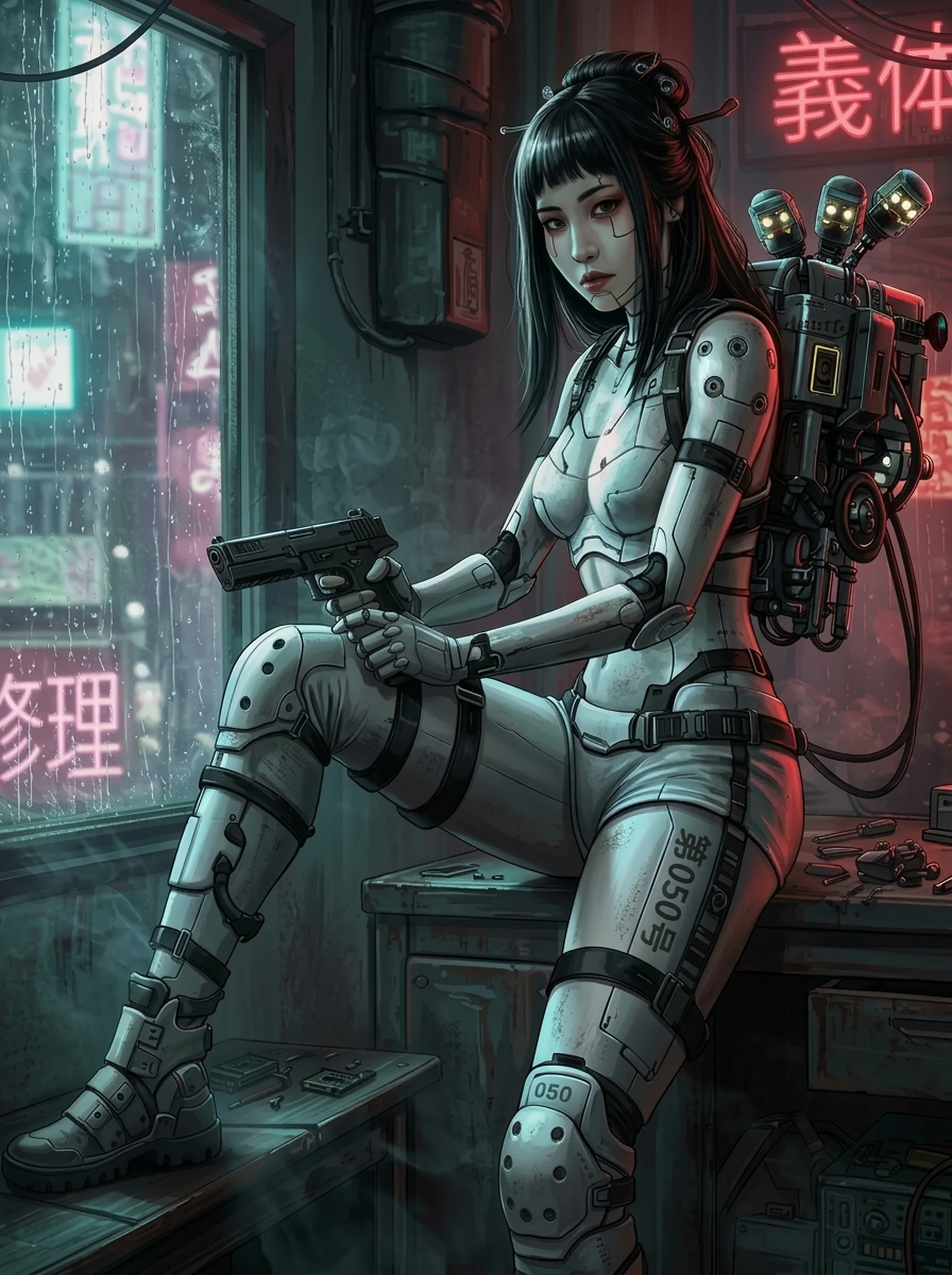
A cybernetic operative pauses in a rain-soaked repair shop, pistol in hand, surrounded by tools, neon reflections, and the quiet ritual of machine maintenance.
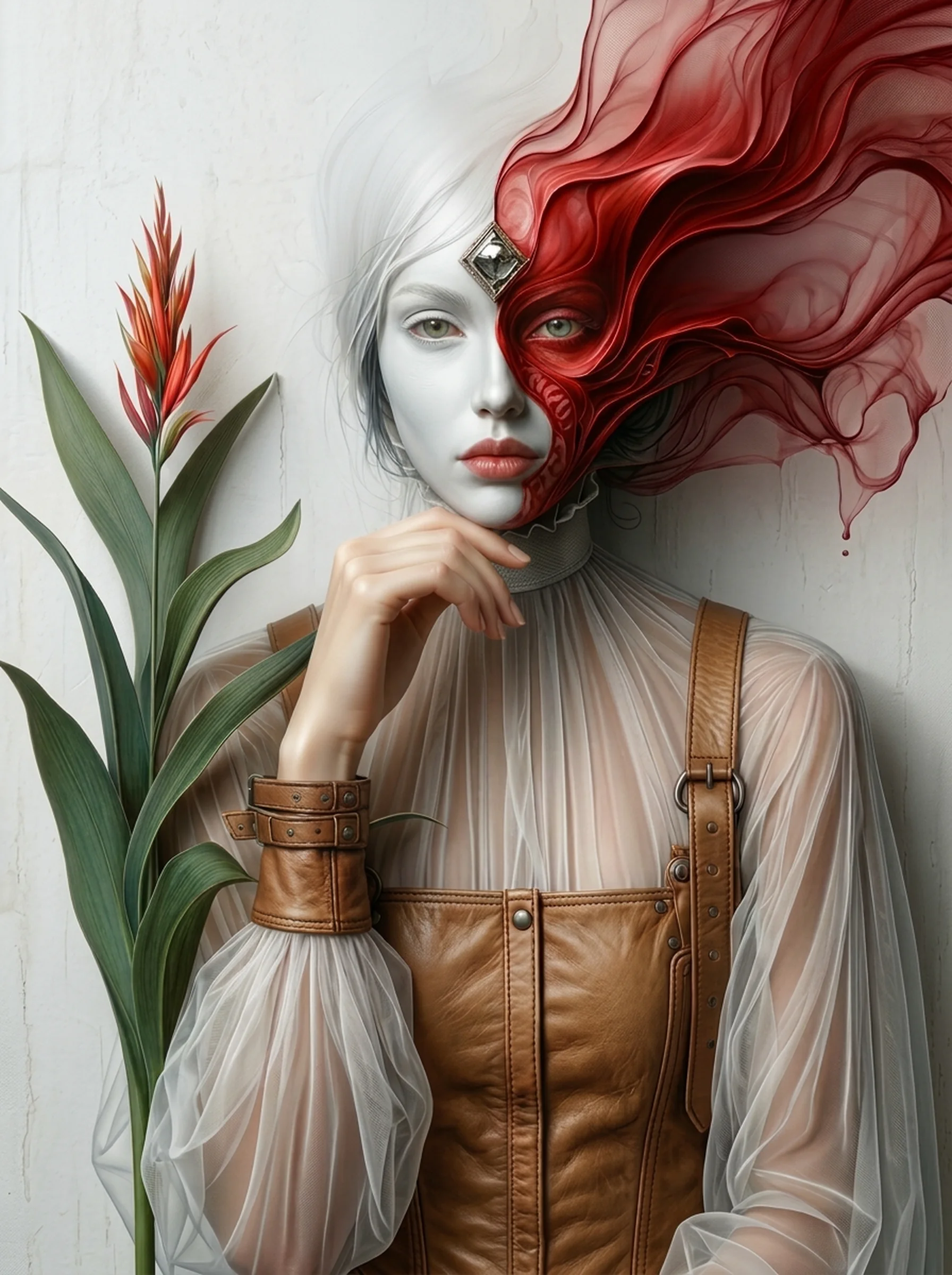
Bird of Paradise blurs the boundary between portrait, pigment, and material. White and crimson flow across her face as a translucent red form unfurls around her head, while soft pleats, worn leather, candle-like fingers, and a bird-of-paradise bloom ground the transformation in tactile detail.
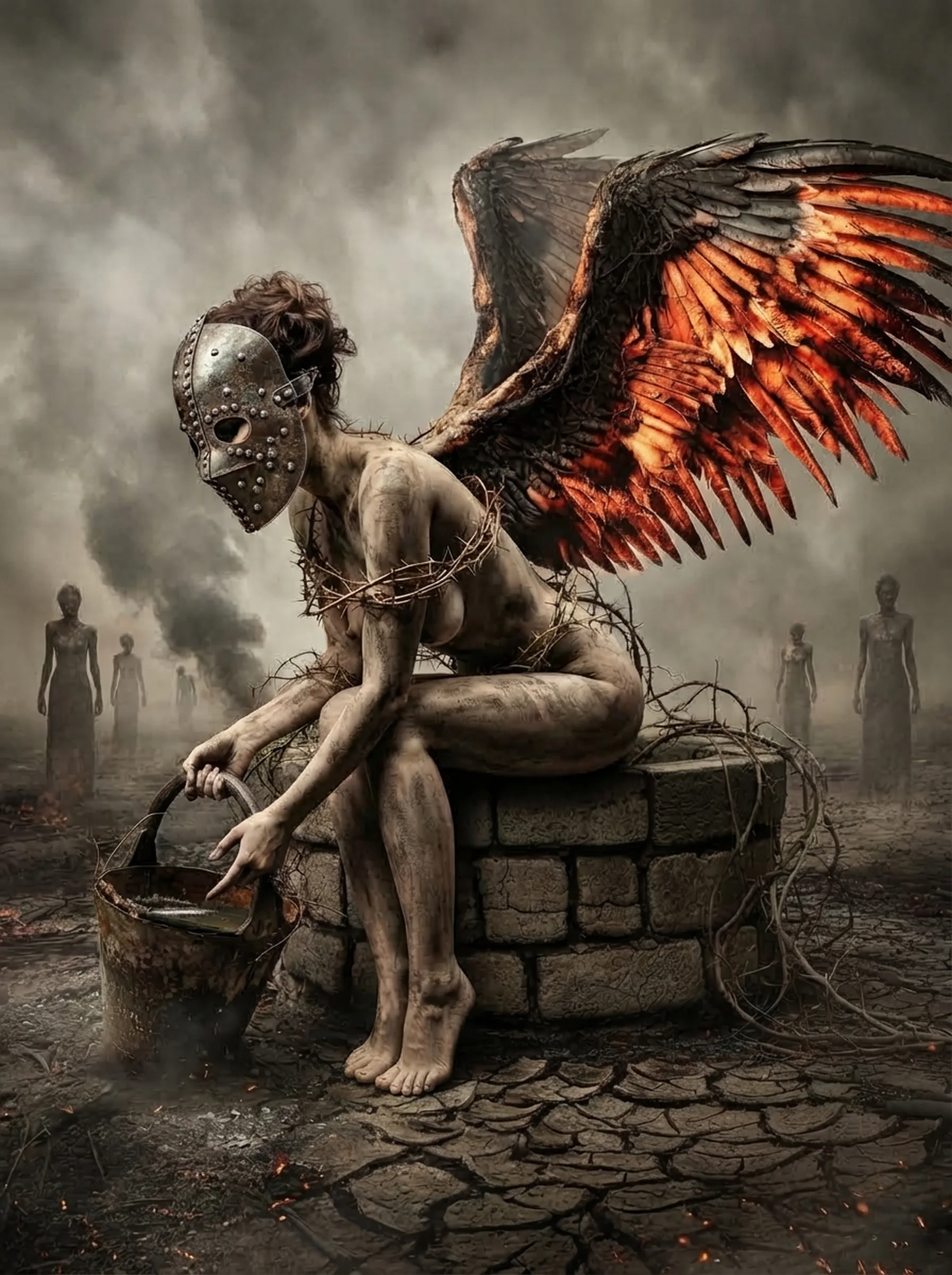
A fallen angel wearing an iron mask and burnt, smoldering wings sits on the edge of a stone well in a devastated wasteland. Thorny vines wrap around her body as she holds a rusted bucket filled with water from the well, while distant figures stand motionless behind her through smoke and haze. The scene suggests an ironic punishment: she is made to water dead ground that refuses to hold water.
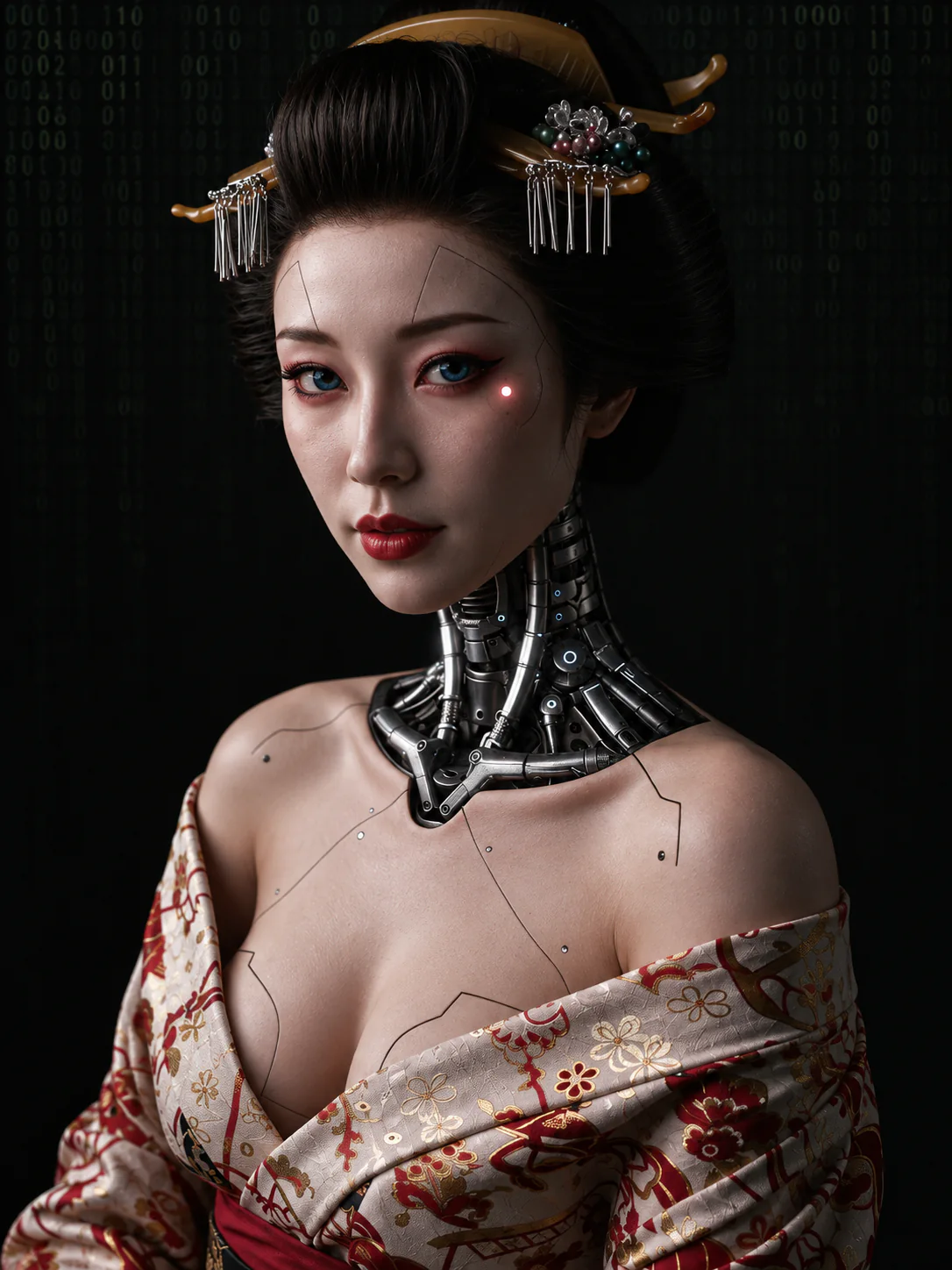
Chrome Maiko blends the elegance of hanamachi tradition with synthetic design: ornate hair ornaments, refined styling, and silk patterns set against exposed machinery and embedded lights. The result feels less like costume and more like a glimpse into a future where ritual, beauty, and technology have evolved together.
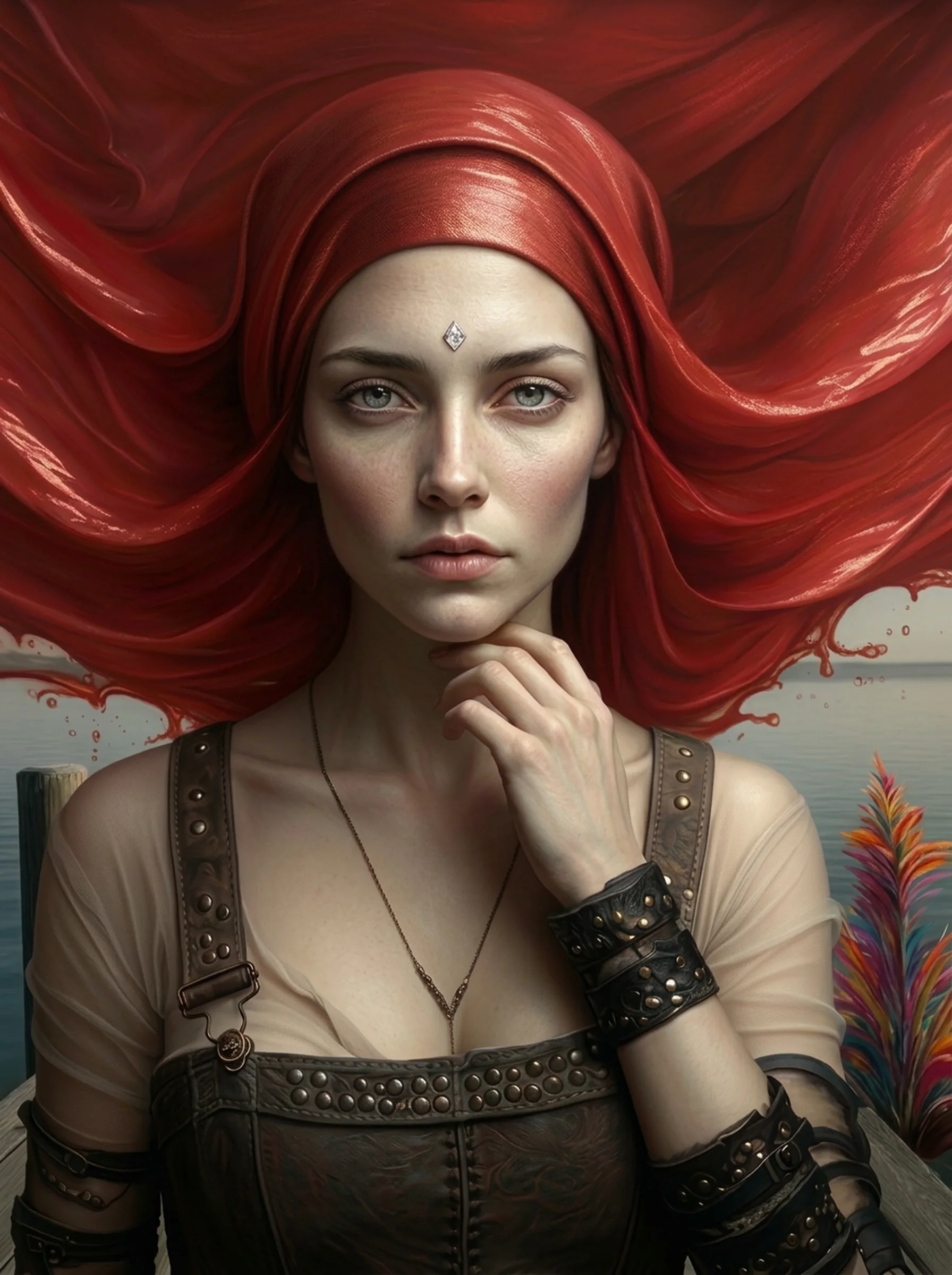
Dripping Scarlet is a surreal portrait built around contrast: calm expression against explosive color, soft skin against textured fabric, and still water against motion that seems to freeze in midair. The crimson headwrap expands behind the subject in sweeping, liquid folds, framing her face and turning the composition into something both elegant and dreamlike. Fine facial detail, restrained styling, and the small burst of color from the plant at the right edge keep the image grounded while the red forms push it into fantasy.
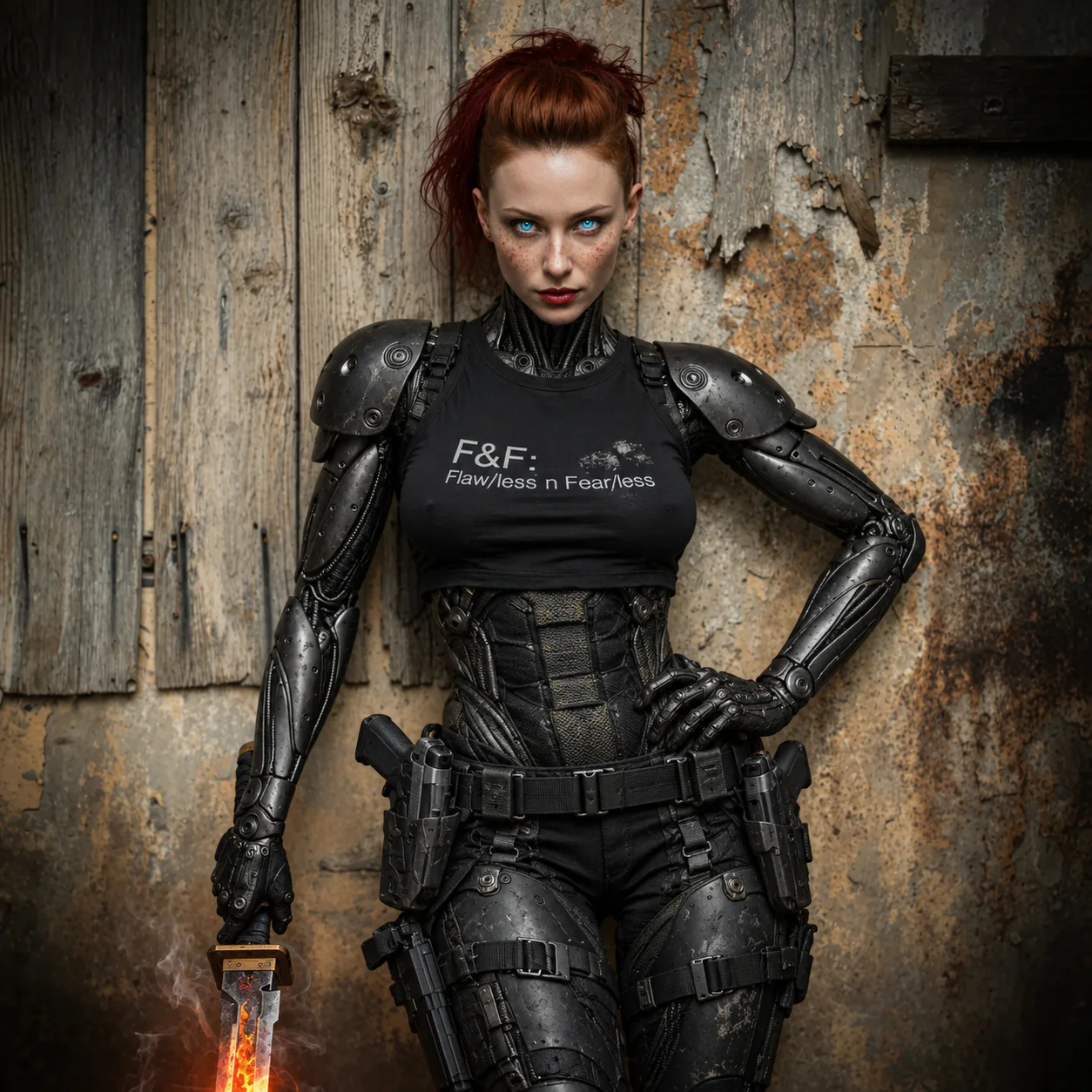
Flawless and Fearless pairs battlefield engineering with absolute composure. Weathered armor, twin sidearms, exposed mechanical limbs, and a heat-scorched blade suggest a body designed for hard use rather than display. Yet the strongest weapon in the frame may be her expression: calm, direct, and utterly unconcerned with whoever is standing in front of her.
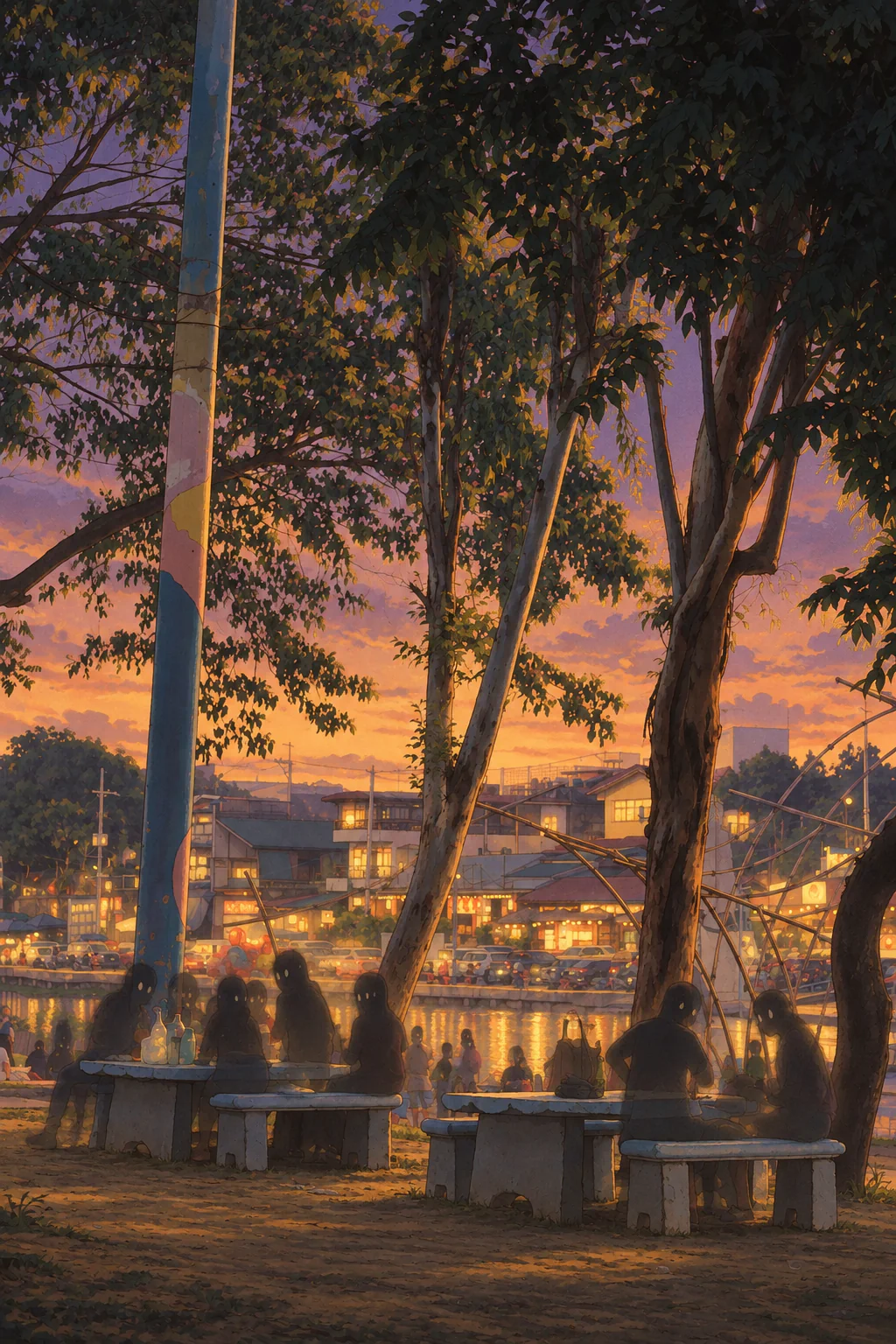
As evening settles over the riverside, the ordinary world softens into something stranger and gentler. Families gather beneath the trees, but in the fading light they become quiet little spirits, half-cute and half-creepy, as if the whole park has slipped for a moment into another realm.

At first light, she steps into the warmth of a clear volcanic spring, where mist rises gently from the heated water and the waking sun turns every ripple to gold. Wildflowers lean toward the shore, her maroon wrap darkens with the water, and the little jetty keeps the quiet evidence of what she left behind.
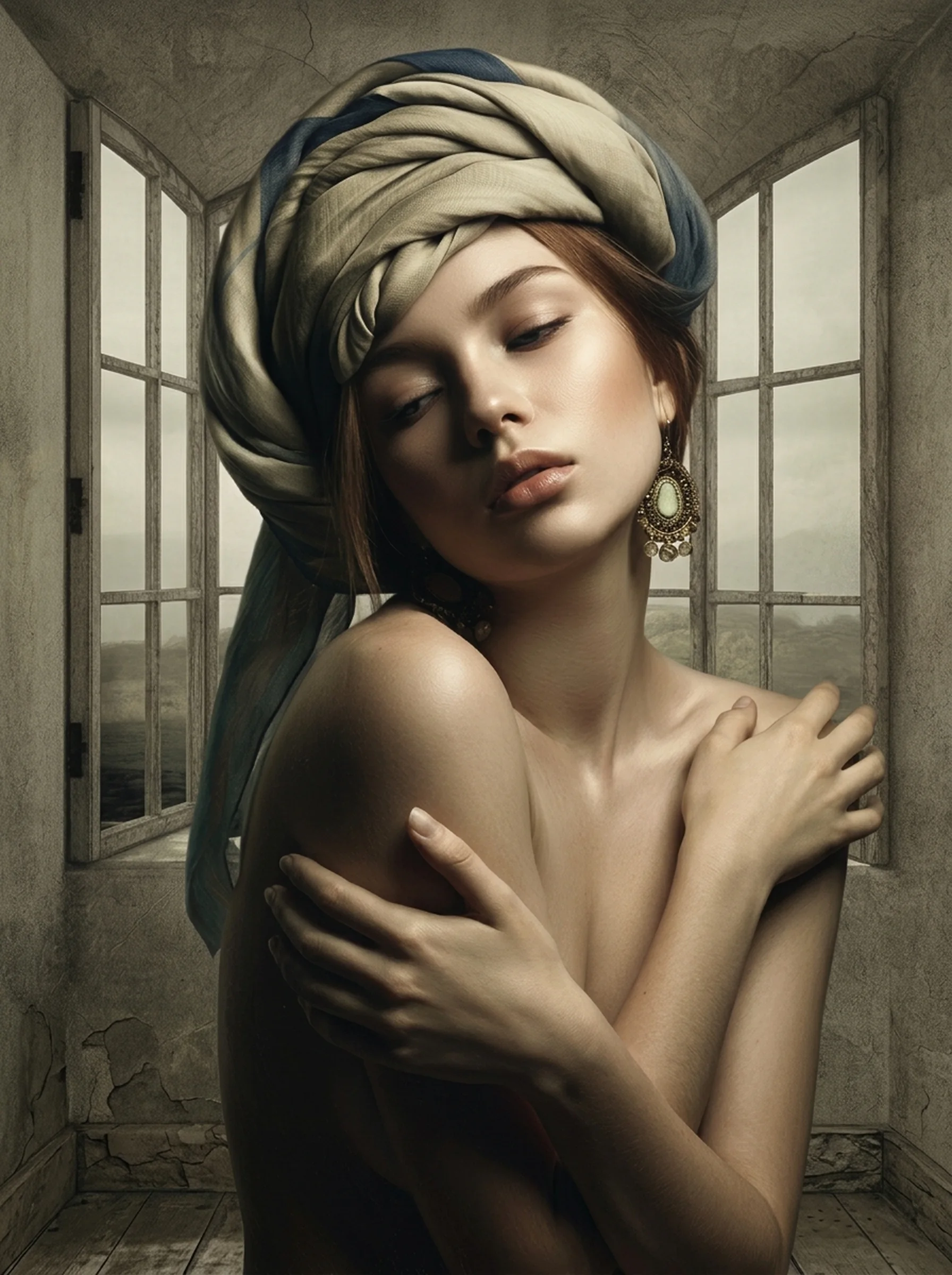
Held Close turns a simple gesture inward. Framed by cracked plaster, open windows, and a muted landscape beyond, the figure folds her arms around herself beneath an oversized headwrap. Soft skin tones, worn surfaces, and restrained light give the portrait a quiet sense of solitude without making it feel fragile.
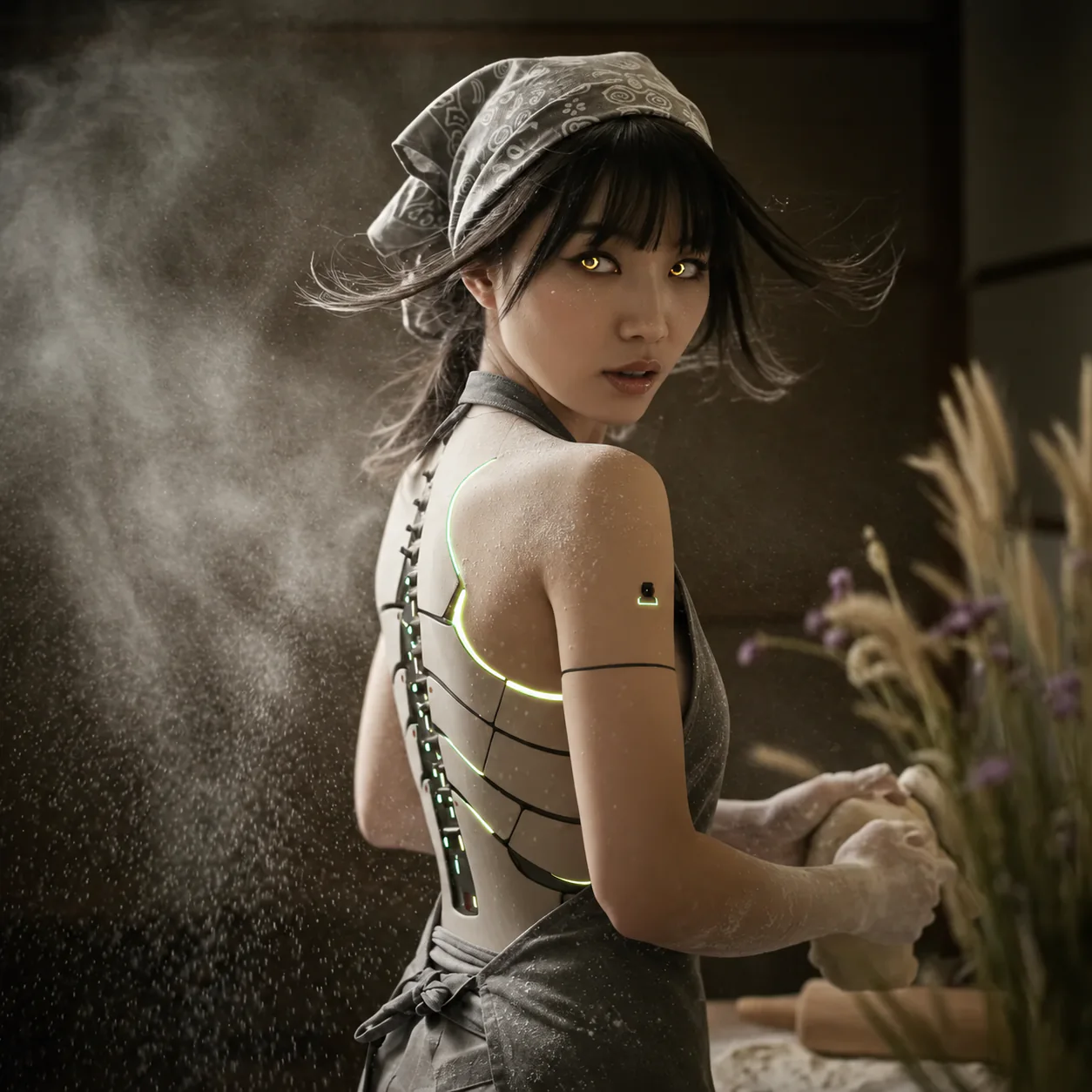
Takumi balances craft and circuitry in a quiet workshop scene. Flour hangs in the air as the cybernetic baker works by hand, while dried wheat and lavender-like purple flowers soften the industrial details behind her. The contrast makes the image feel less like a machine at work and more like an artisan surrounded by the familiar textures of her trade.
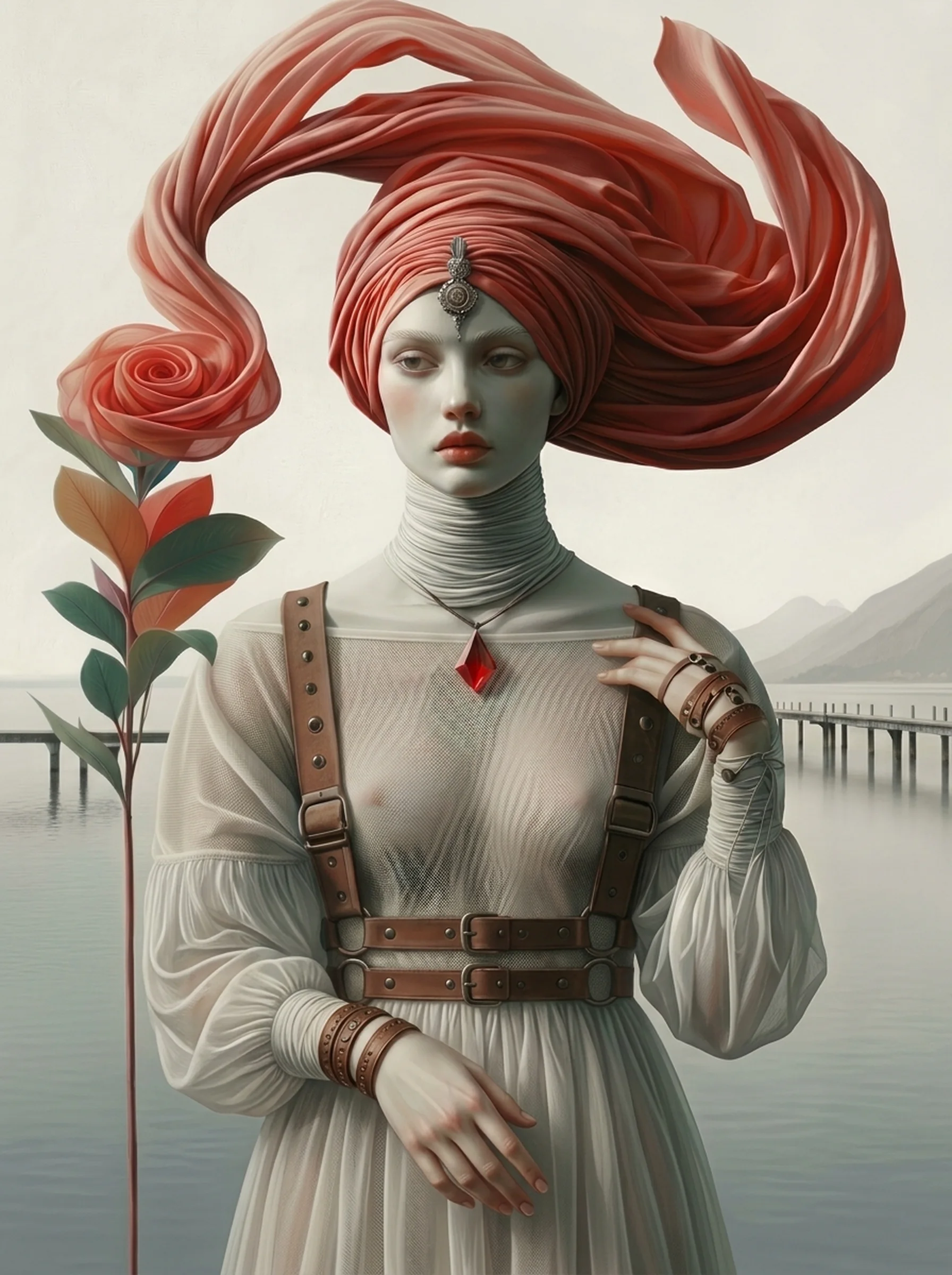
An old-world portrait interrupted by something impossible. Lady at the Pier pairs ivory mesh, weathered leather, and a small ruby pendant with an extravagant coral-red headwrap that seems almost to grow from the landscape itself. Beyond her, a quiet pier and distant mountains recede into still water.
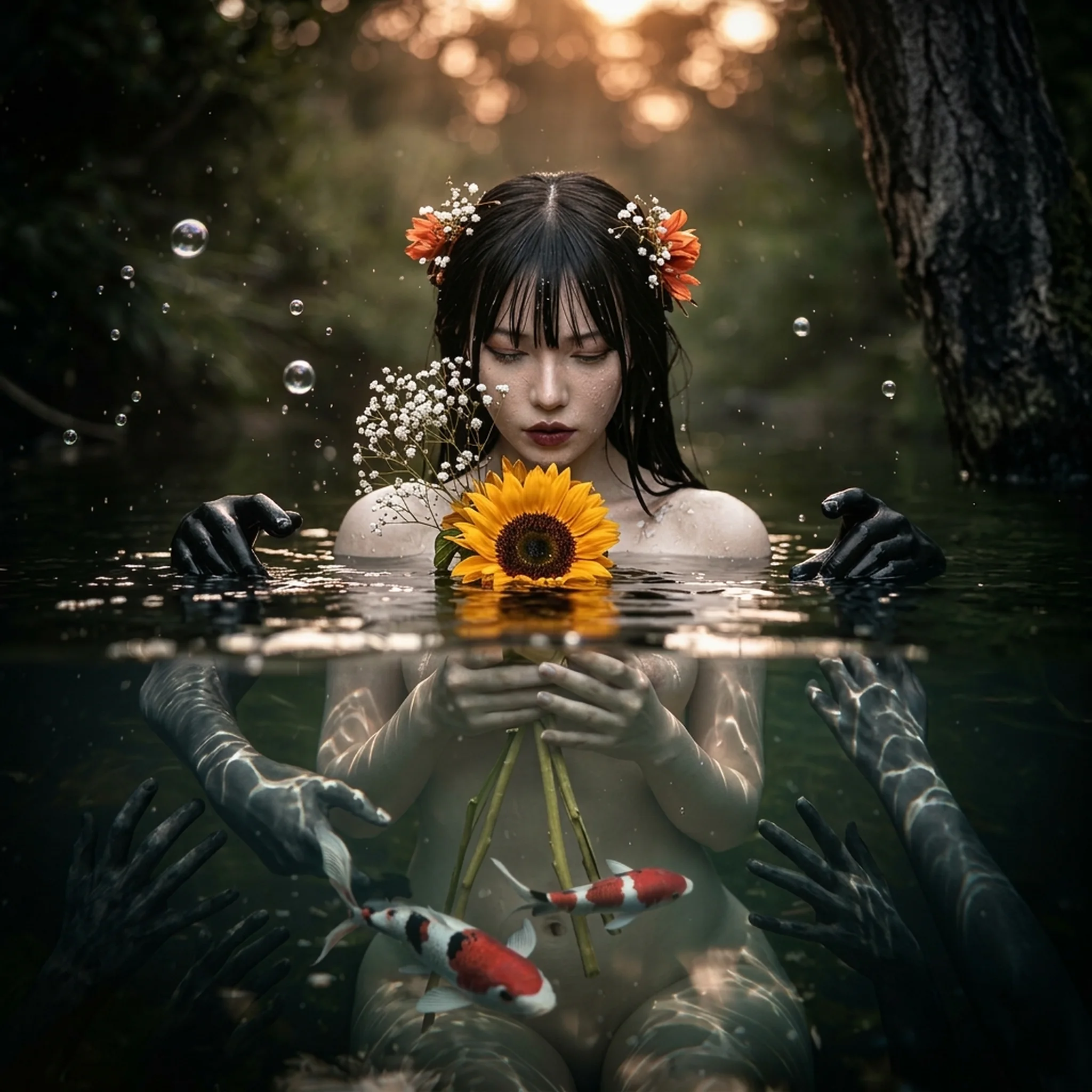
Lady of the Lake drifts between serenity and unease. Above the water, flowers, stillness, and soft light create an almost ceremonial calm; below it, koi move through the darker depths while shadowed hands seem to reach upward from beneath the surface. The image holds beauty and tension in the same frame, as if the lake is preserving something it has not yet decided to release.
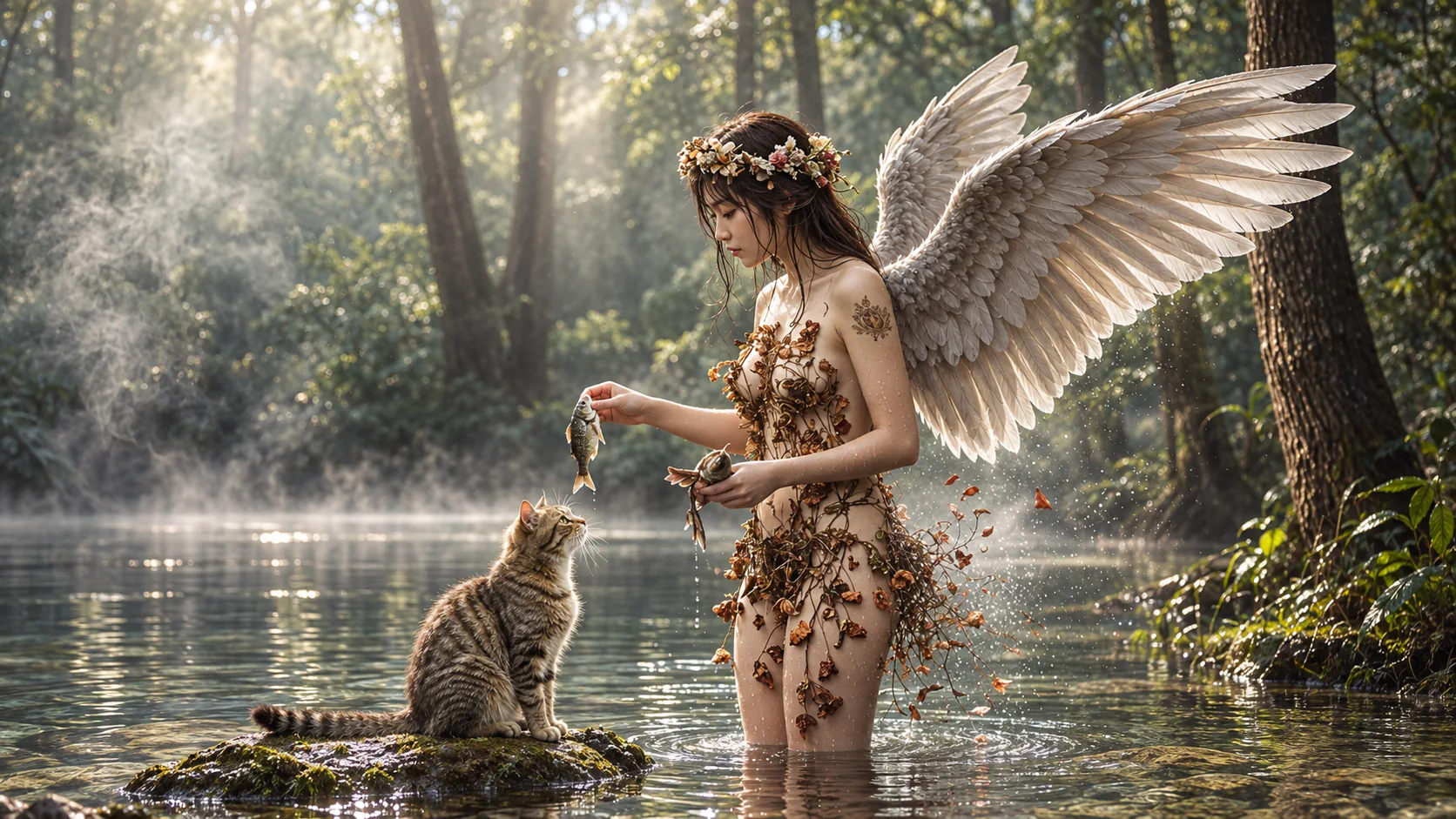
She offers him a fish. He looks past it with the solemn concentration of someone expecting something else entirely. Perhaps tribute. The lake stays clear, the morning mist hangs low, and neither of them seems particularly concerned with explaining the arrangement.
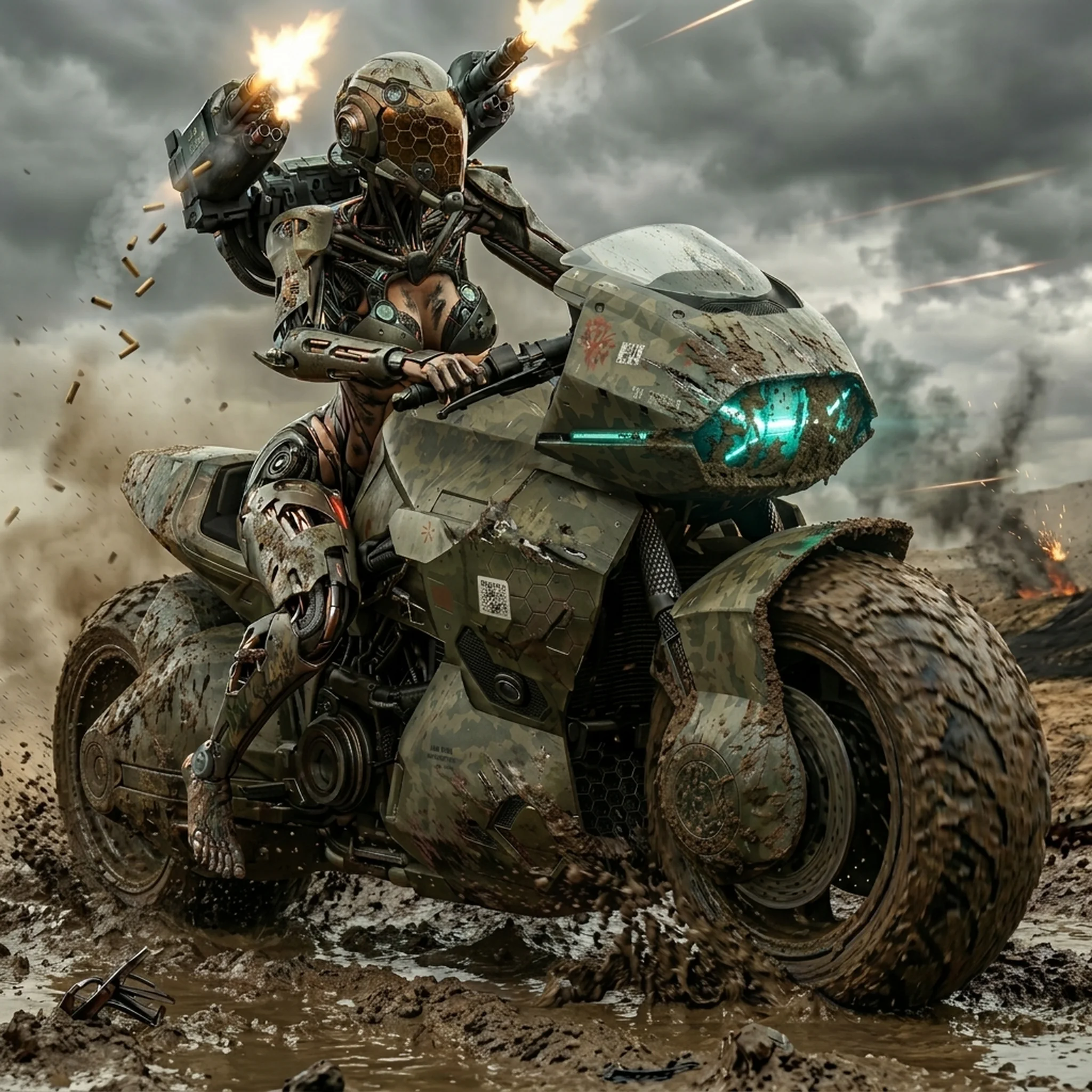
Lost My Fuckin’ Boot drops a cybernetic operative into the middle of a filthy running battle—mud-caked armor, spent casings, active gunfire, smoke, and a combat bike still pushing forward through the chaos. Somewhere along the way, apparently, footwear became optional.
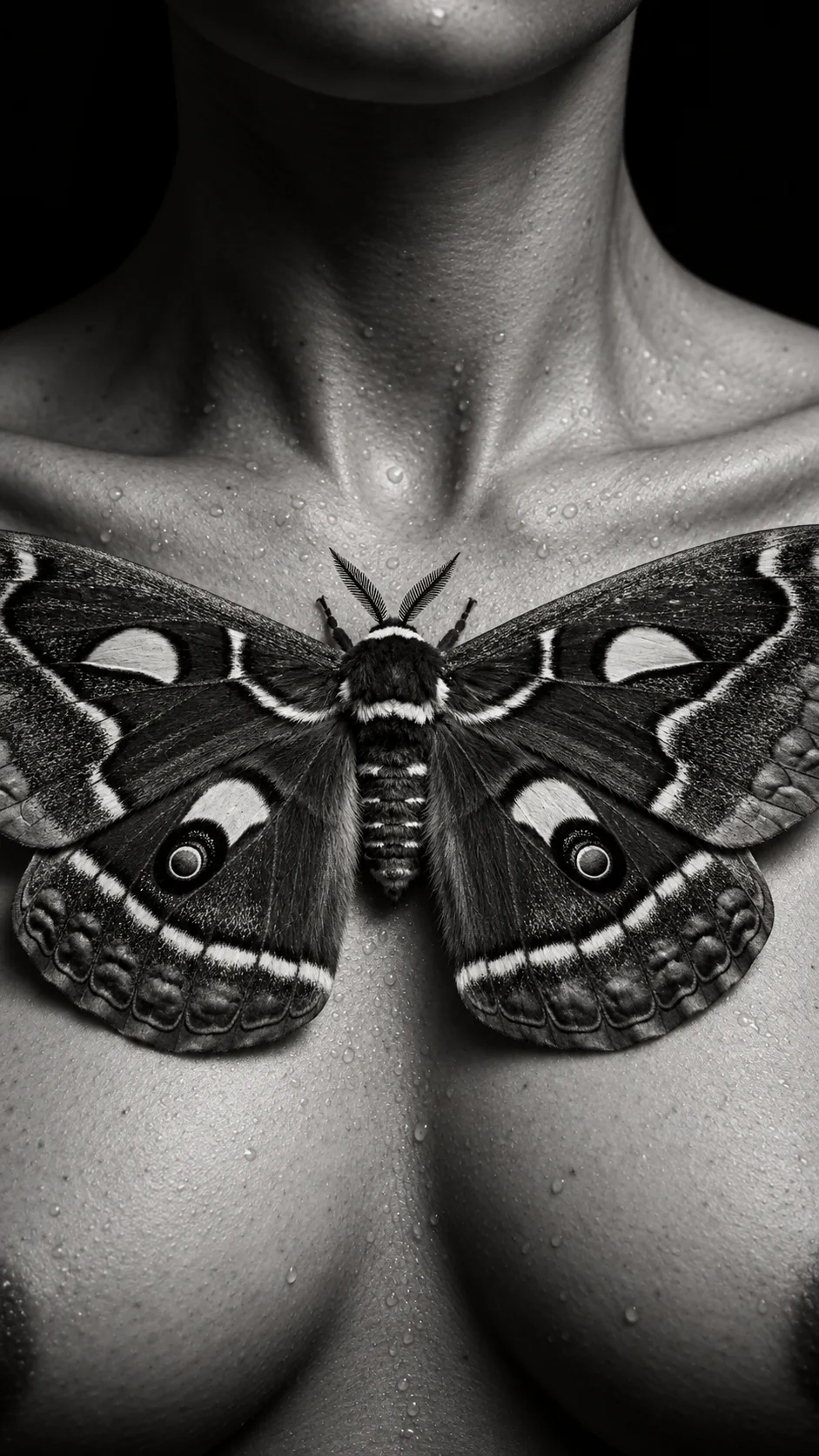
A monochrome study in nocturnal beauty, Moth Heart places a velvet-winged moth at the center of the body, where fragility, stillness, and quiet transformation meet.
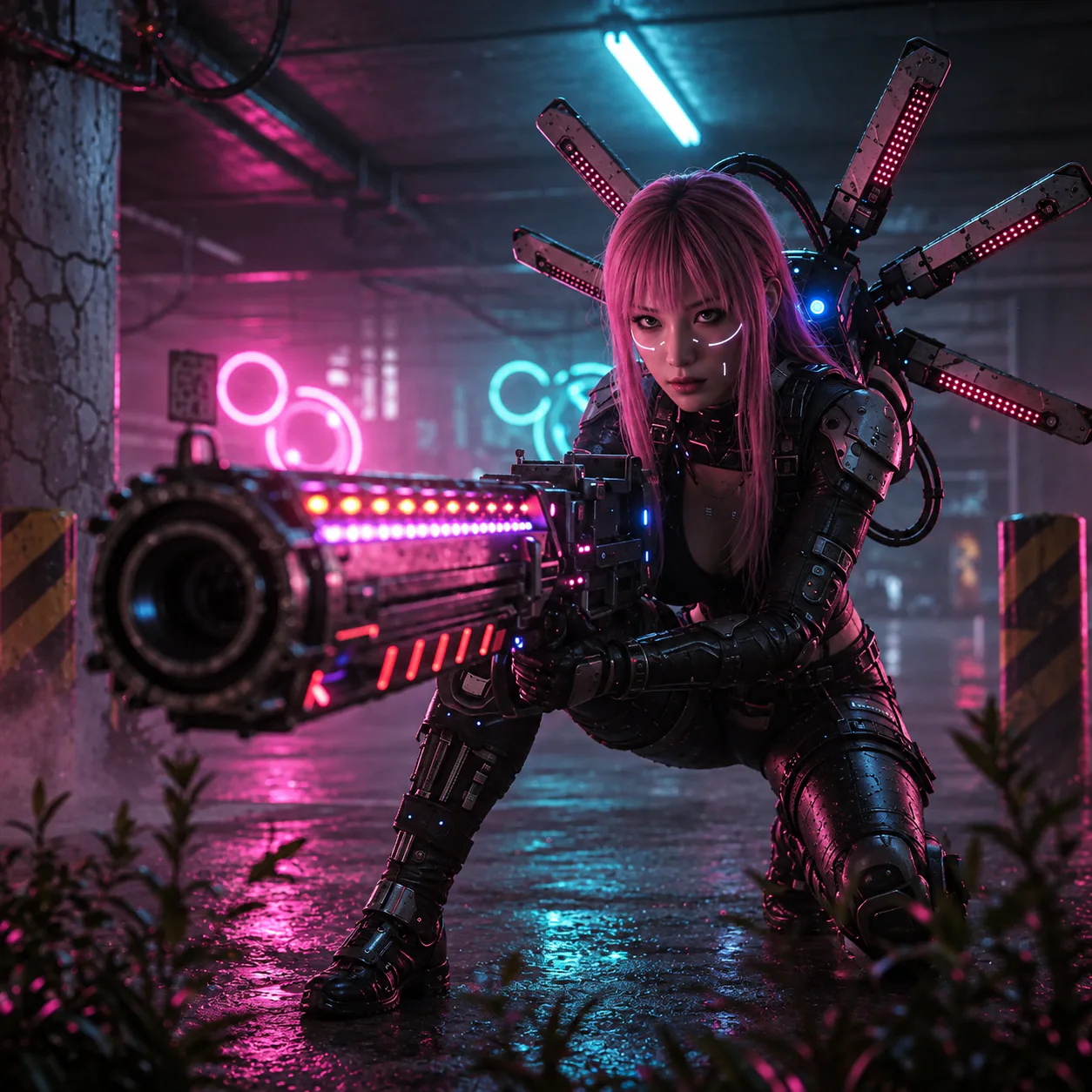
Bathed in magenta and cyan light, Neon Suppression captures a figure poised at the instant before violence becomes inevitable. Within the Neon Rose series, the image balances beauty and threat—soft color and hard machinery, calm focus and overwhelming firepower.
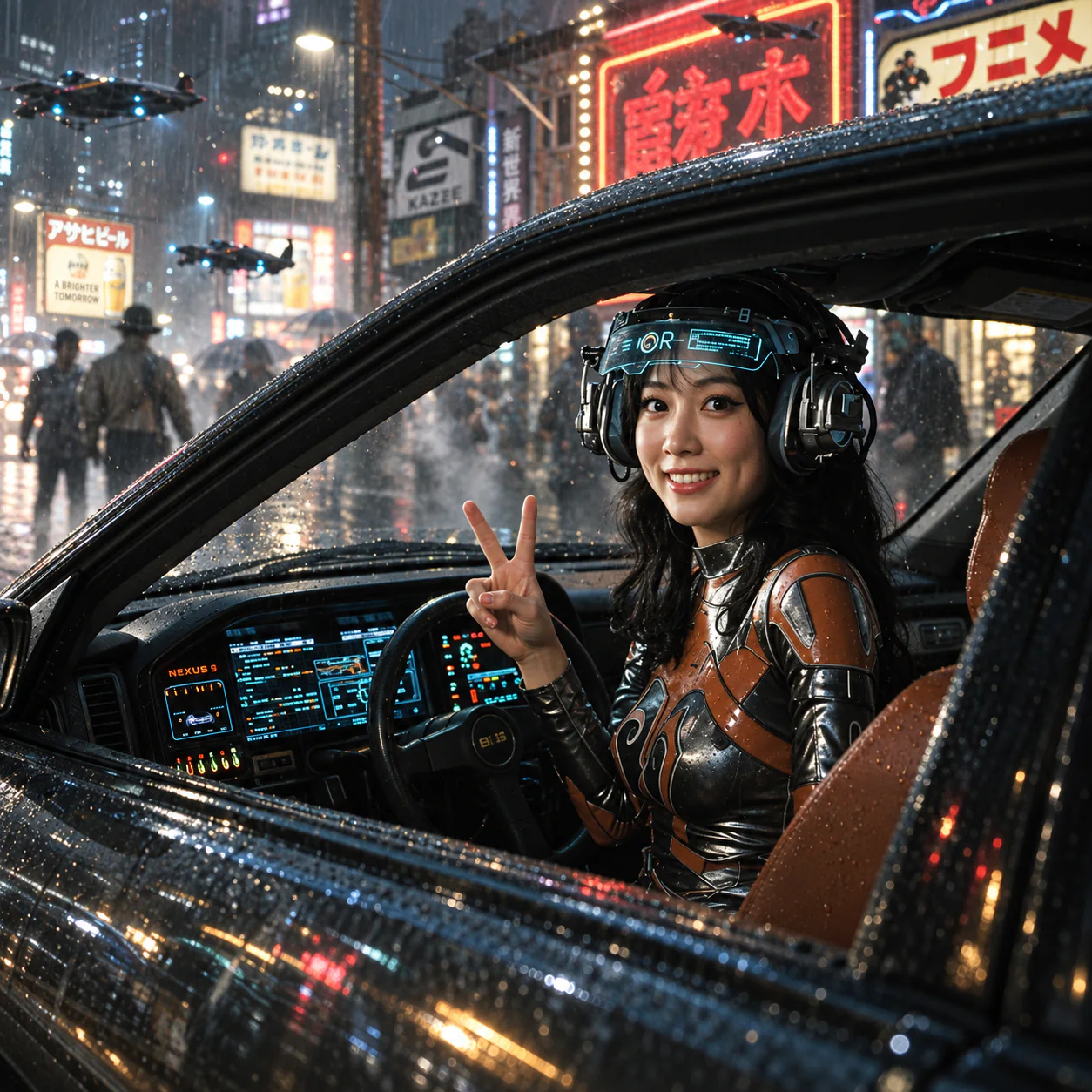
Nexus Nights captures a softer side of retro-futurism: rain on black paint, glowing dashboards, hovering traffic, and a city alive with neon after dark. Dressed in a sleek retro-futurist tracksuit, she feels less like someone simply at home in this future—a smile, a peace sign, and a brief pause before disappearing back into the night.
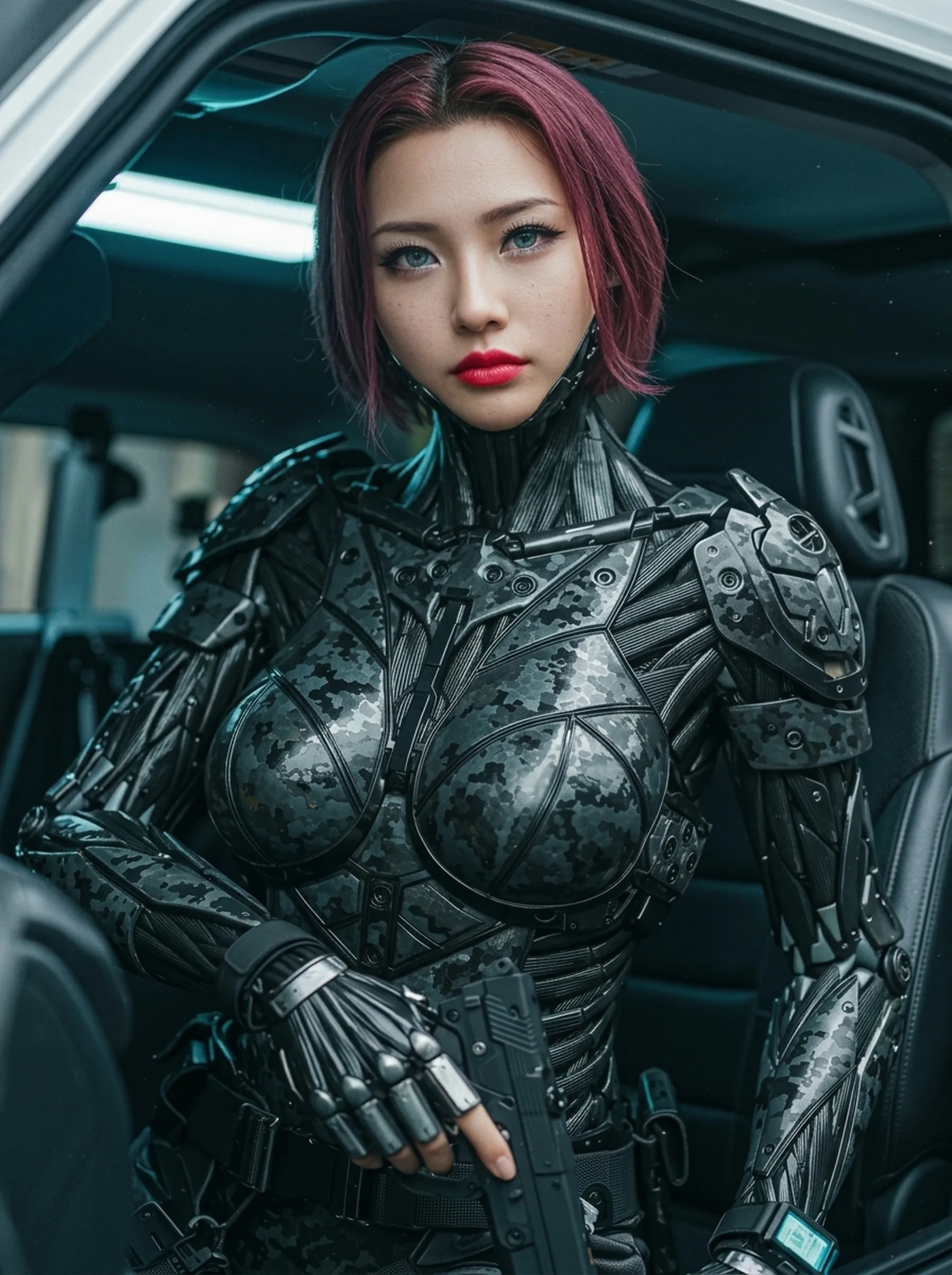
No Backup Needed presents a synthetic operative with the confidence of someone built to handle the situation alone. A ready pistol, engineered body, and restrained tactical styling suggest capability without spectacle, while her composure makes the message clear: reinforcements would only slow her down.
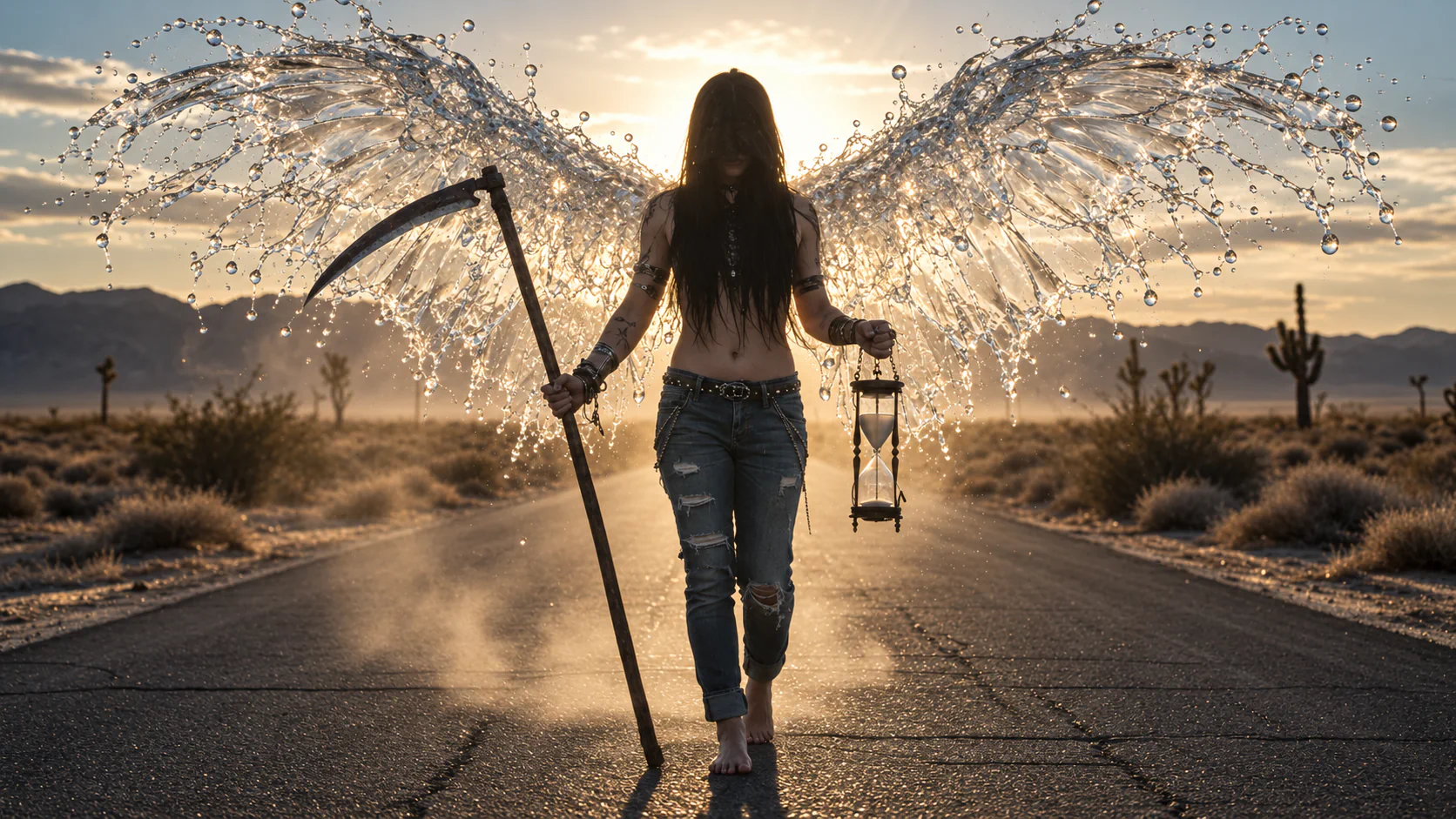
Not Yet finds death waiting rather than arriving. With the scythe already in hand and sand still falling through the hourglass, the winged figure walks beneath the fading sun without urgency. Her translucent wings seem to generate suspended droplets that hover around them, as if moisture itself is caught in her presence rather than falling away. There is still time—but not forever.
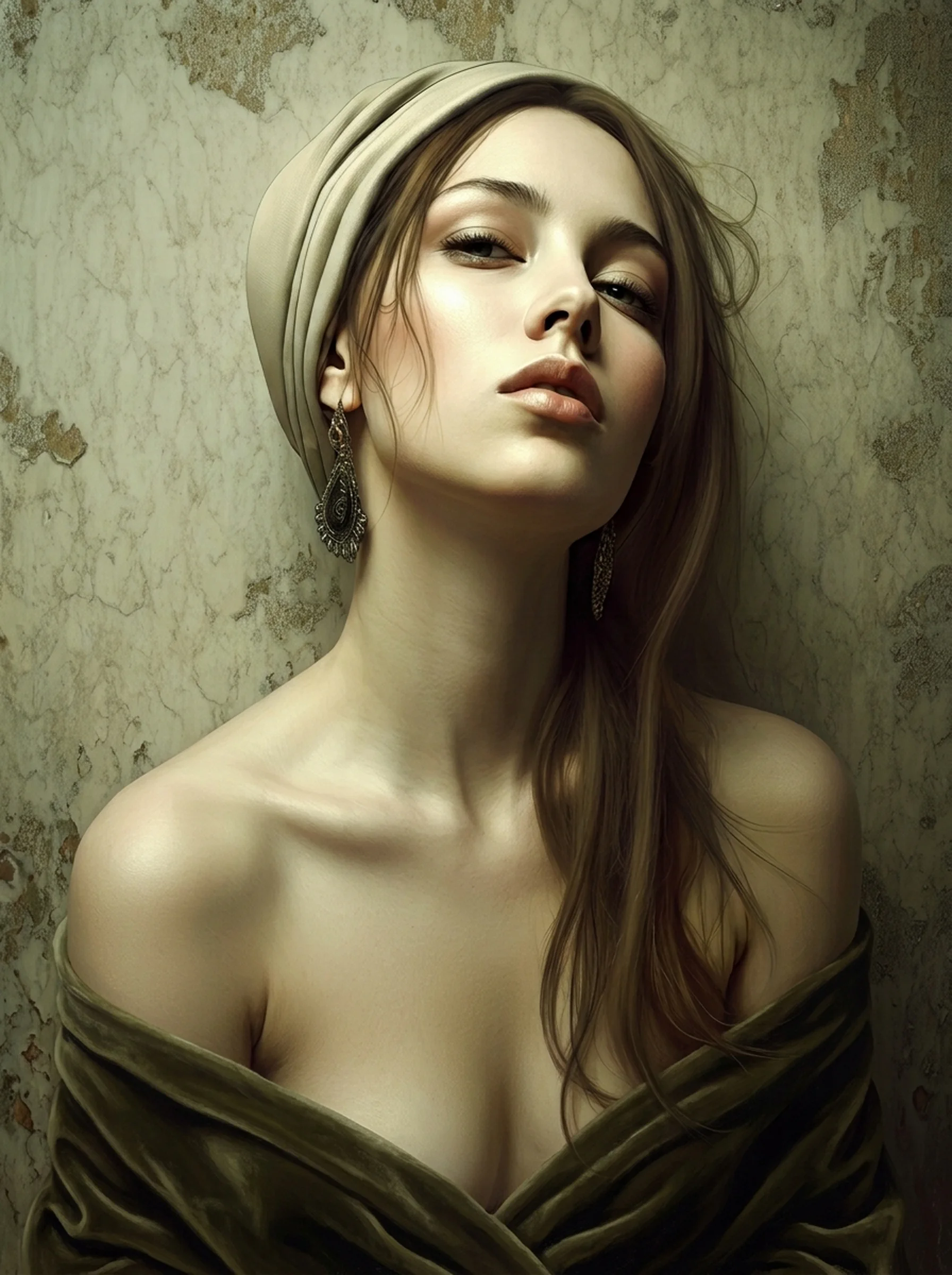
Olive Scarf is a study in texture, posture, and restraint. Soft fabric, aged plaster, loose strands of hair, and worn metal jewelry sit within a muted olive-and-earth palette, while the upward tilt of her face gives the portrait a quiet confidence that feels both intimate and distant.
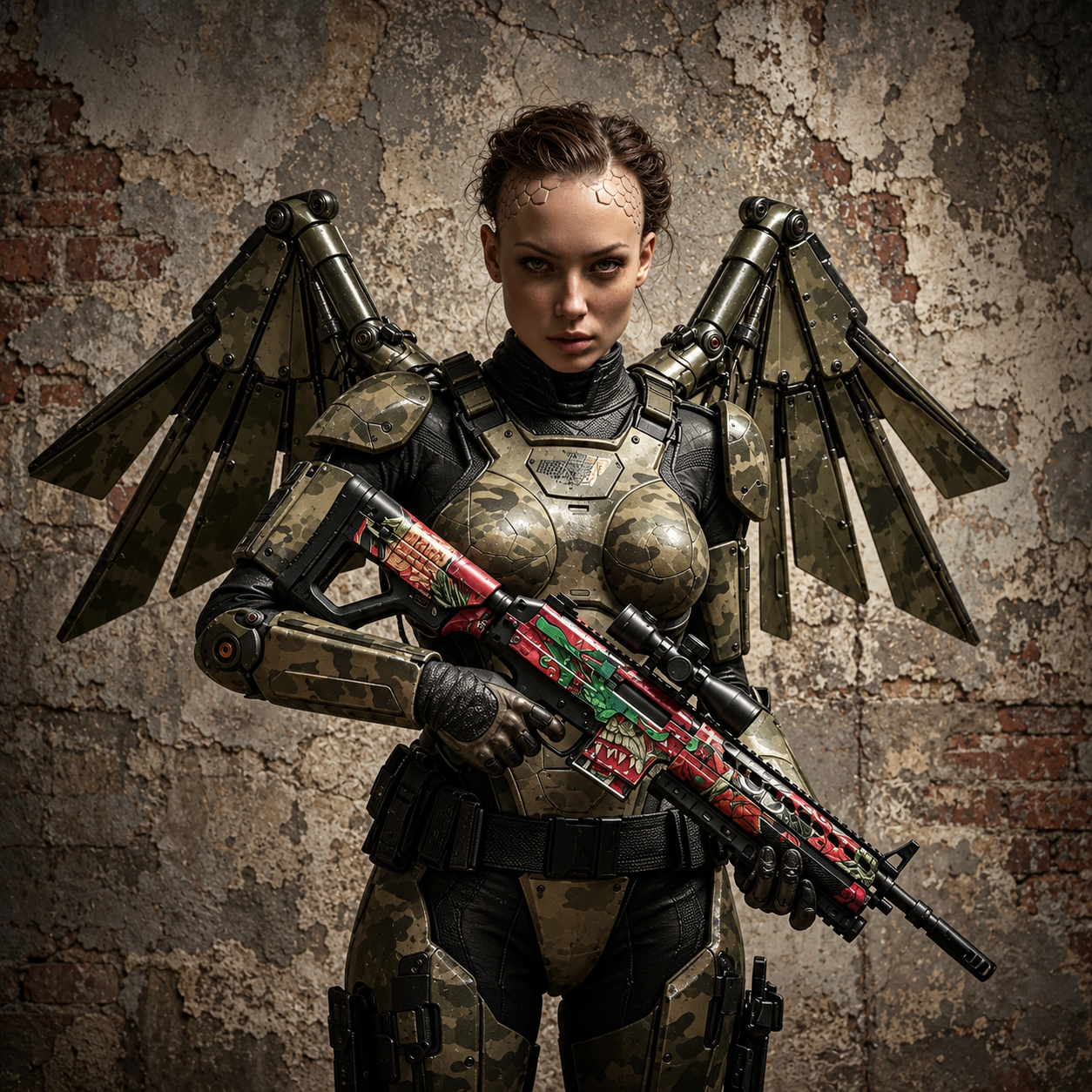
Built for rapid insertion, sustained pursuit, and mission completion under hostile conditions, these units are designed to carry orders through without hesitation. Their armored frames, powered wings, and customized weapons make them effective across terrain most conventional troops can’t reach. But be careful what you wish for. They follow orders extremely well, and won’t stop until the job is done.
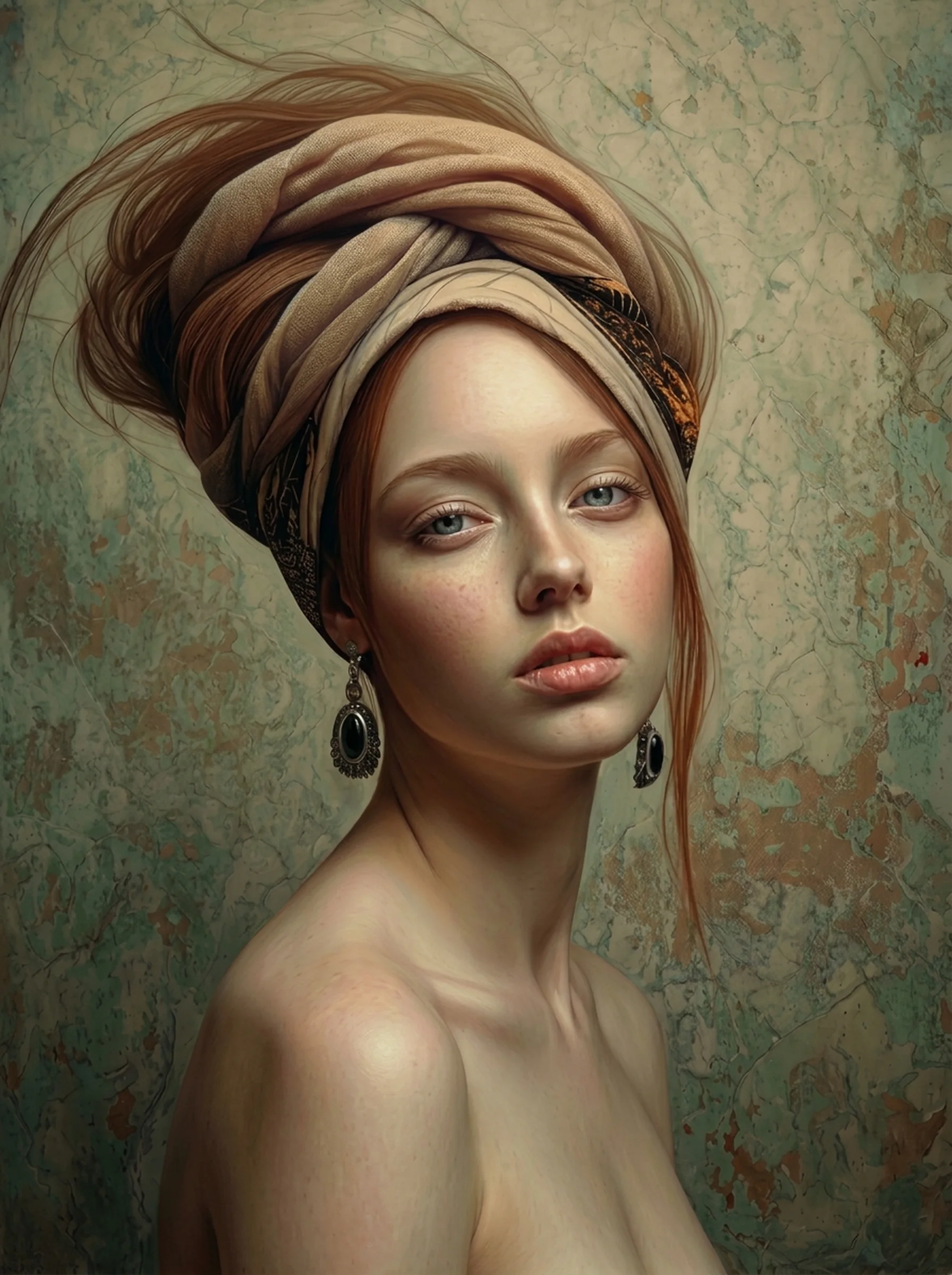
This image has a refined, almost gallery-like stillness. The layered headwrap gives the portrait height and sculptural shape, while the weathered wall behind her adds rich texture and age. Her expression is calm and distant, and the combination of soft skin detail, muted earth tones, and subtle painterly realism makes the whole piece feel delicate, poised, and a little dreamy.
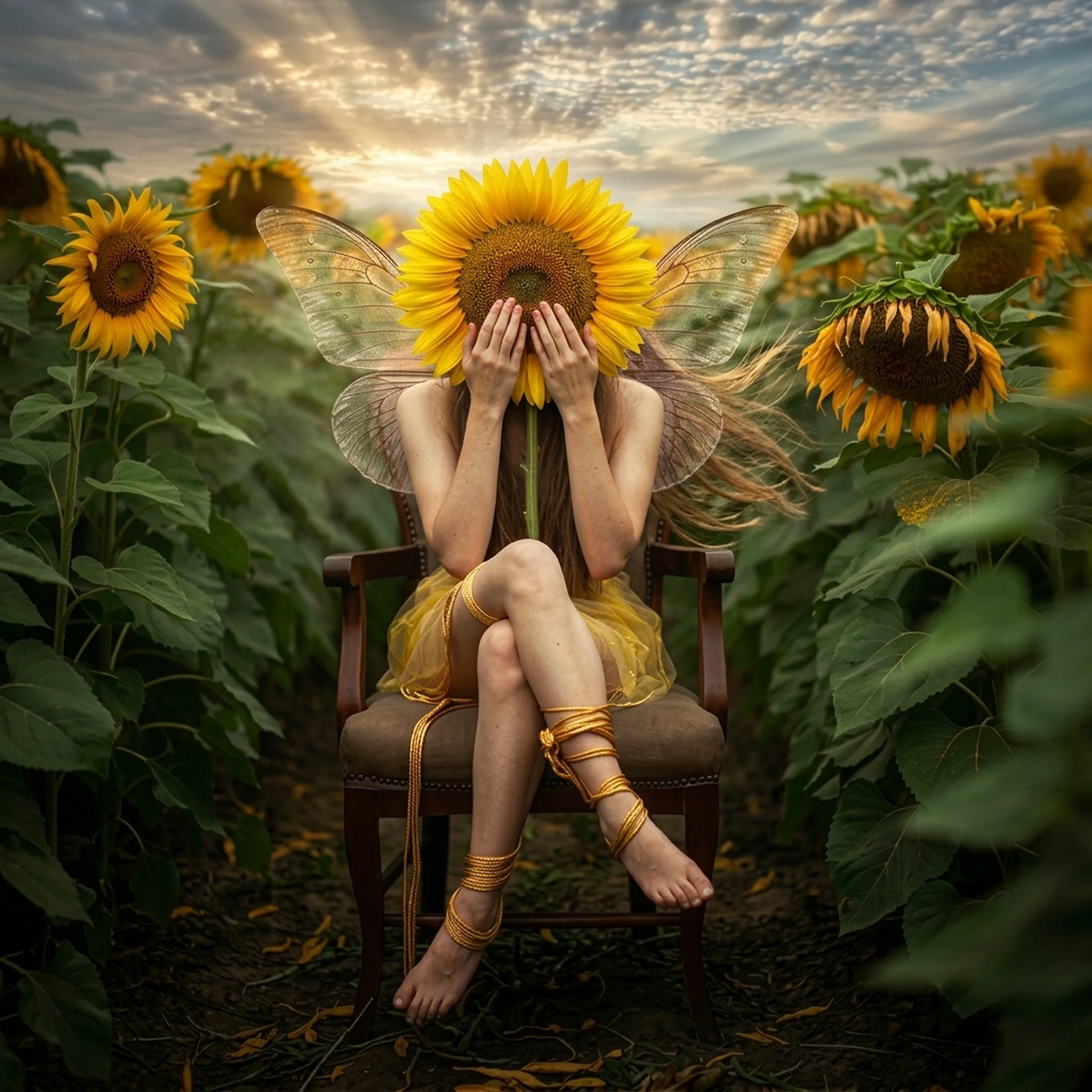
Peak-a-Bloom turns a sunflower field into a quiet game of hide-and-seek. A sunflower fairy sits among towering blooms, concealing her face behind a sunflower while translucent wings catch the evening light. Whimsical at first glance, the scene keeps just enough mystery to feel like something glimpsed rather than fully revealed.
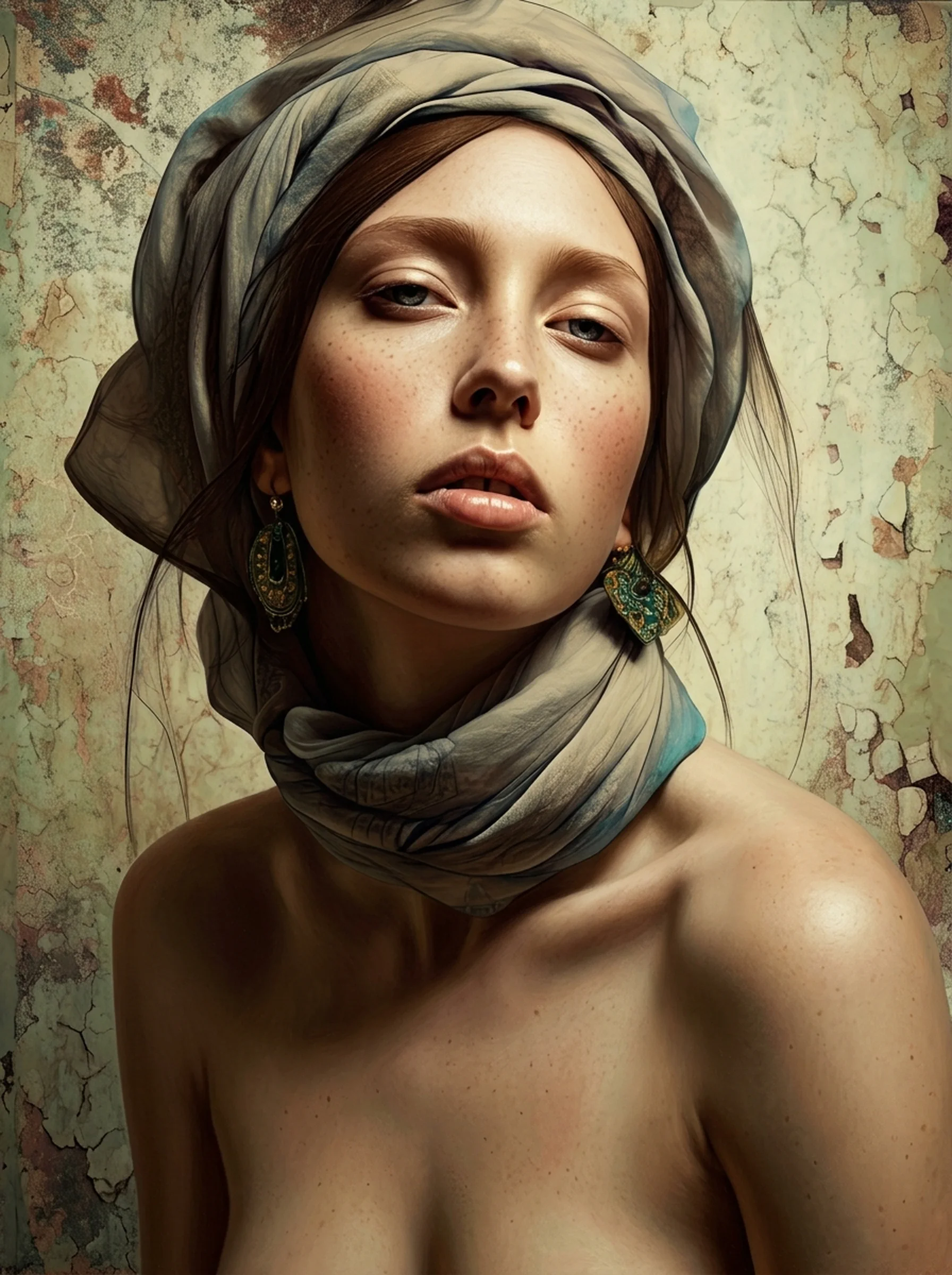
A quiet, dreamlike portrait built around stillness, texture, and a detached gaze. Her expression feels inward and unbothered, as if she’s drifted into a private little nirvana beyond the frame.
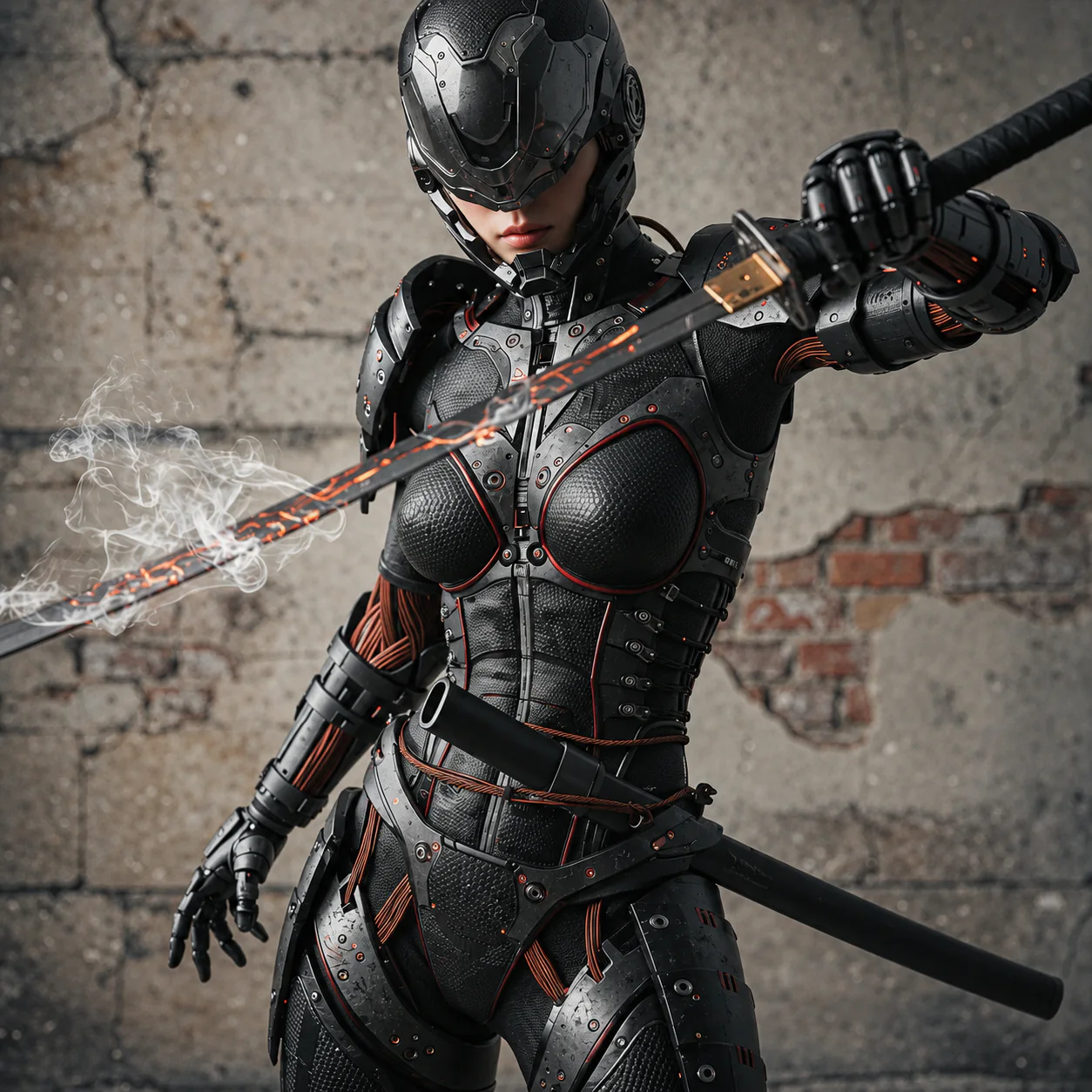
Redline Draw captures the instant before motion becomes violence. Matte black armor, exposed mechanical detail, and restrained red accents frame a blade glowing with residual heat, giving the image a sense of precision rather than spectacle. Nothing about her stance feels rushed; she looks completely in control of what comes next.
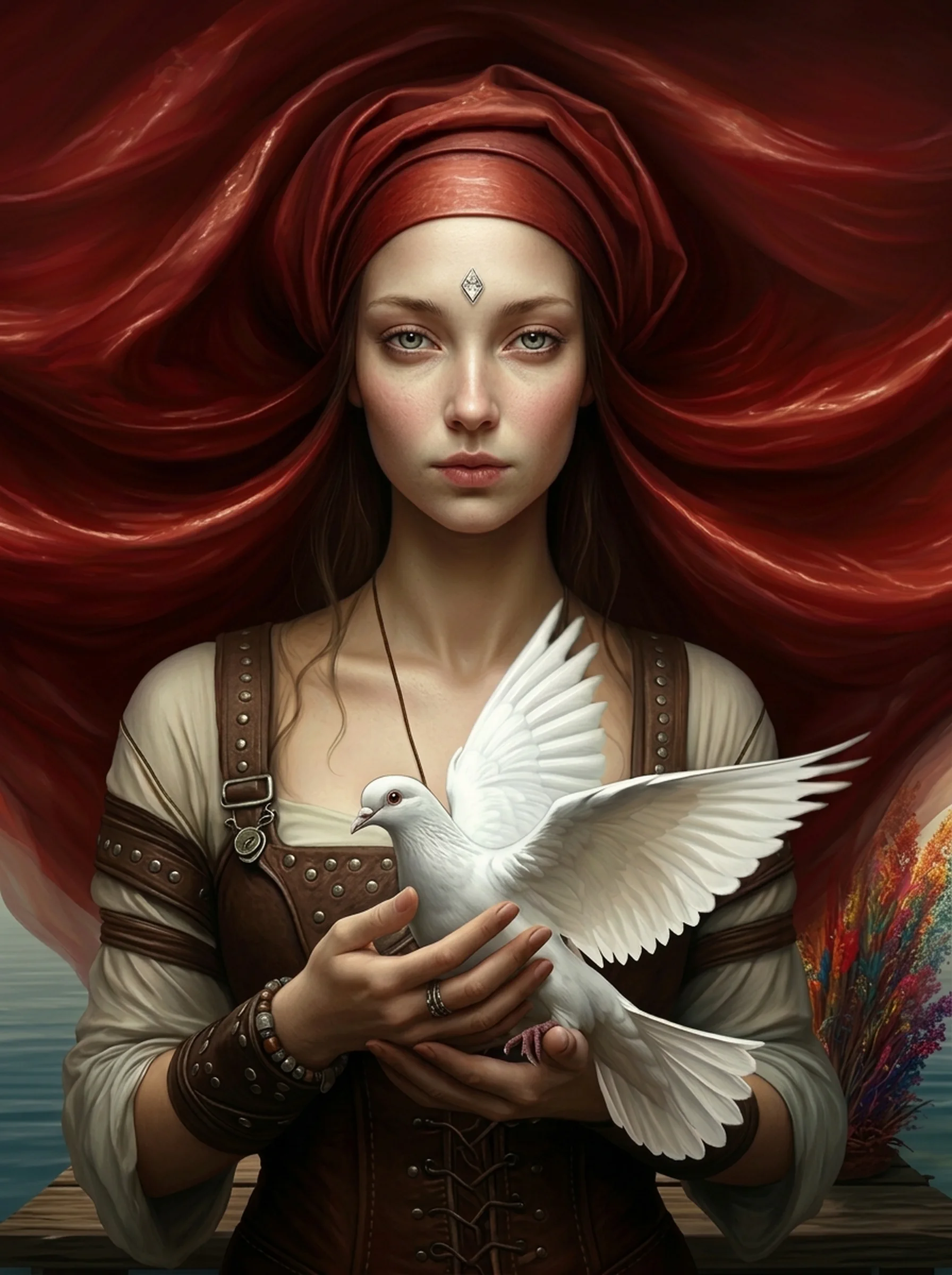
Scarlet Peace sets a white dove against a field of deep crimson, turning a familiar symbol of peace into something more dramatic and ceremonial. The woman’s still expression, the bird’s open wings, and the sweeping red sheer fabric of her scarf create a quiet tension between calm and intensity.
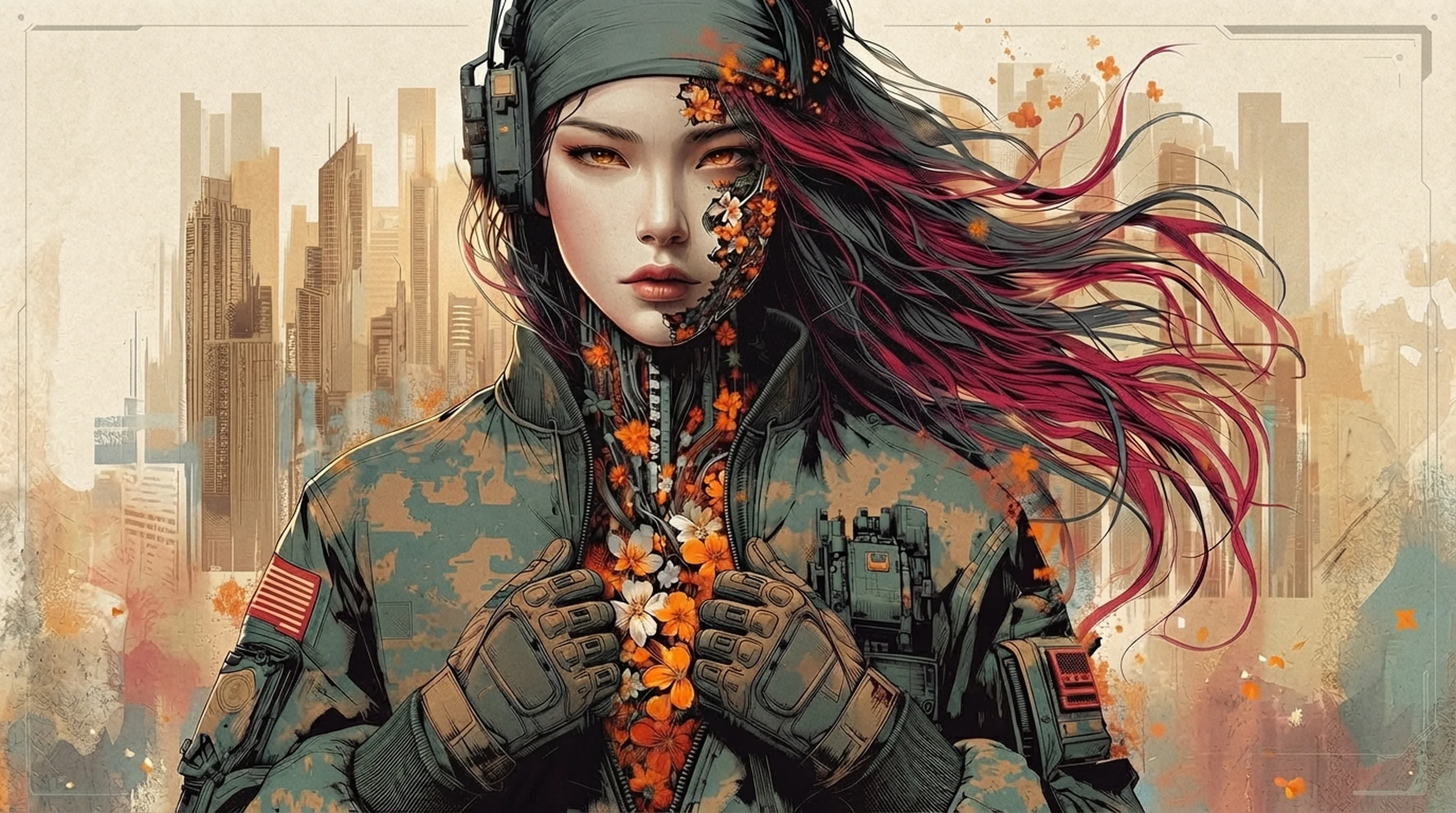
Flowers thread through synthetic skin and machinery while the city rises behind her in quiet geometric layers. Signal Bloom balances engineered precision with something softer, organic, and stubbornly alive.
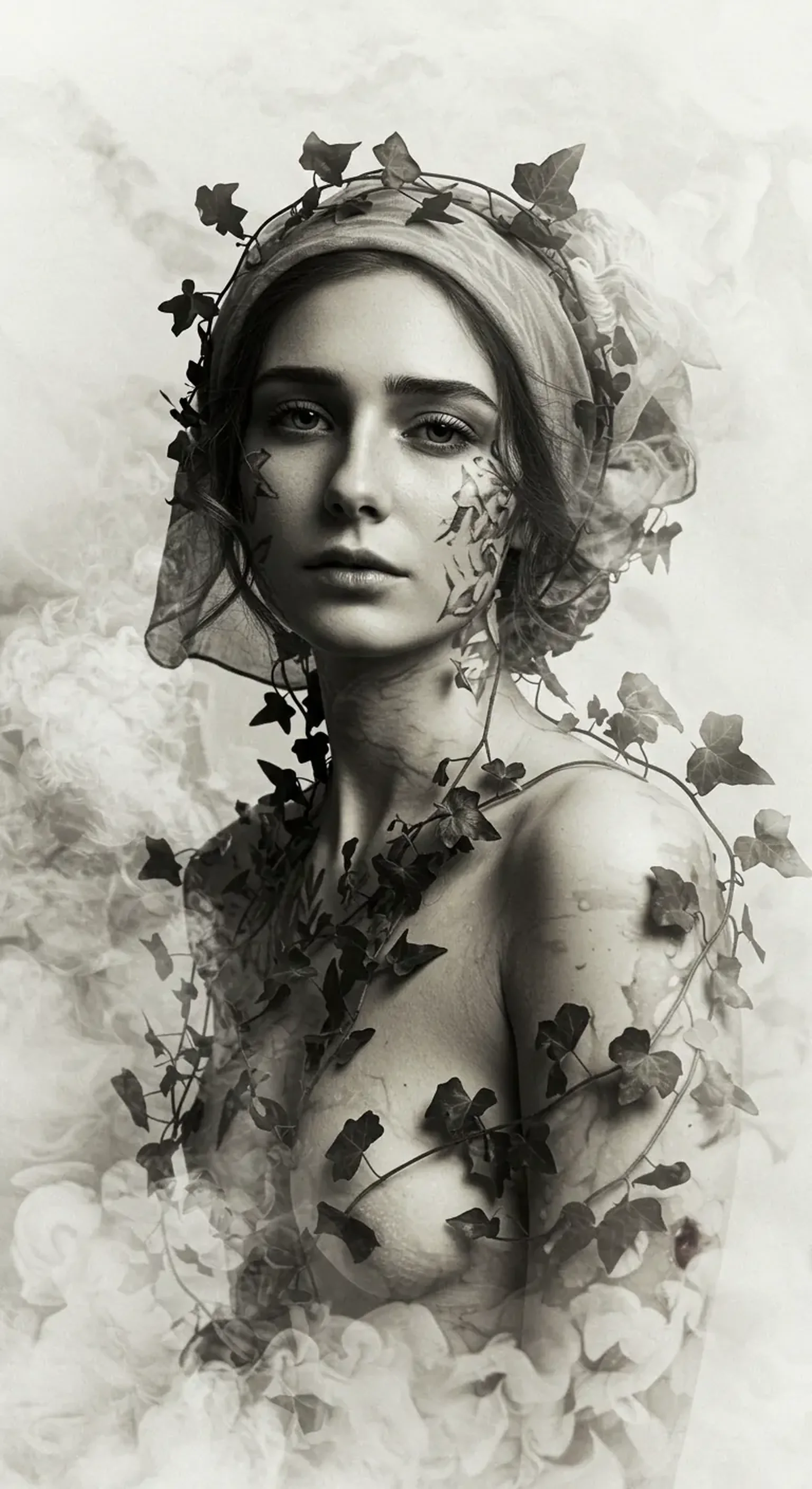
Smoke and Ivy blurs the boundary between portrait and apparition. Dark vines climb across skin and fabric while pale smoke dissolves the edges of the figure into the background, creating the sense that she is being slowly absorbed into the landscape around her. The restrained monochrome palette keeps the image quiet, intimate, and slightly uncanny.
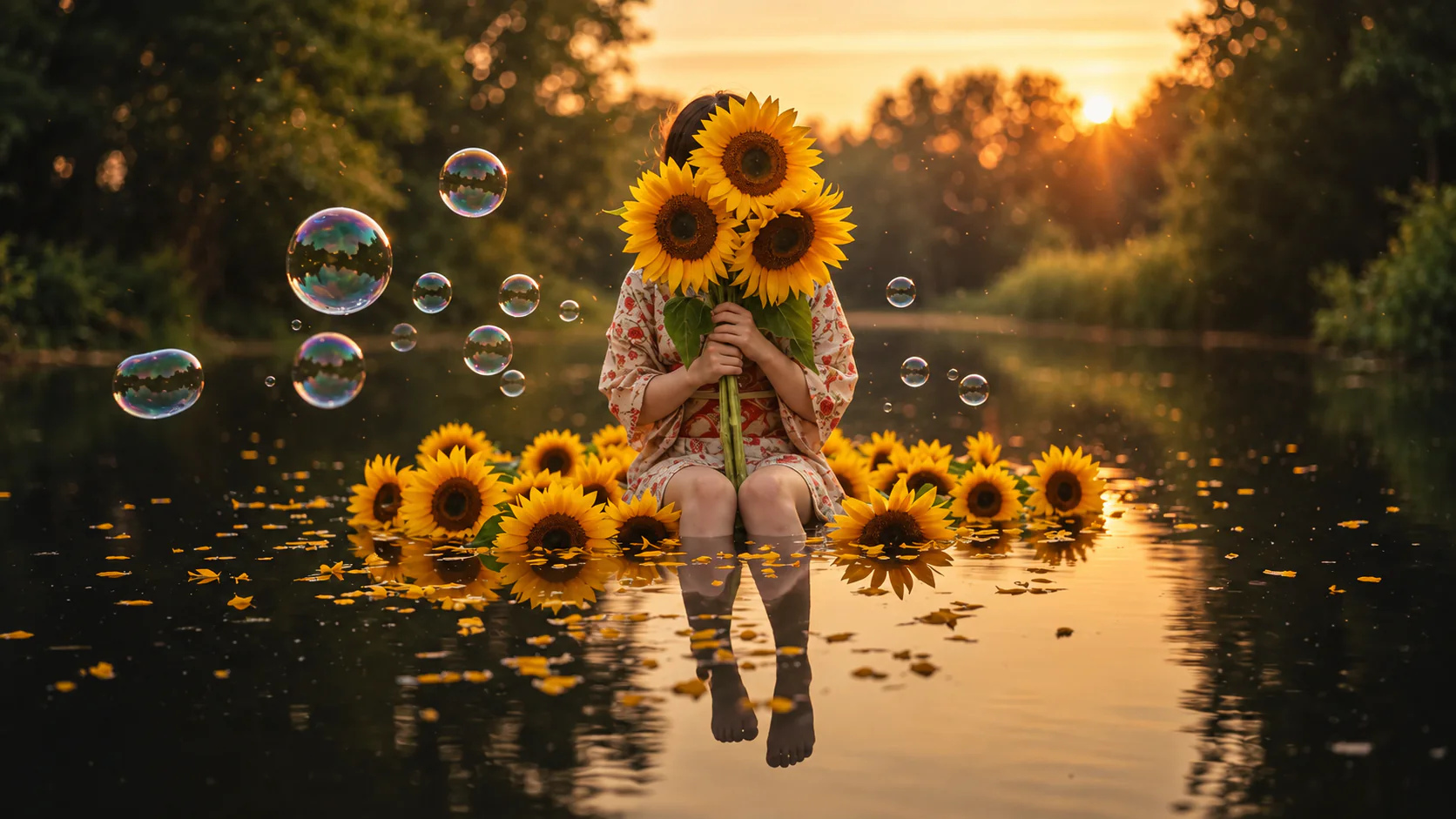
At sunset, she sits in that impossible space between floating and resting, hidden behind a bouquet of sunflowers while bubbles drift through the warm evening air. The river keeps its own quiet illusion, reflecting her just enough to make the eye hesitate between dream and reality.
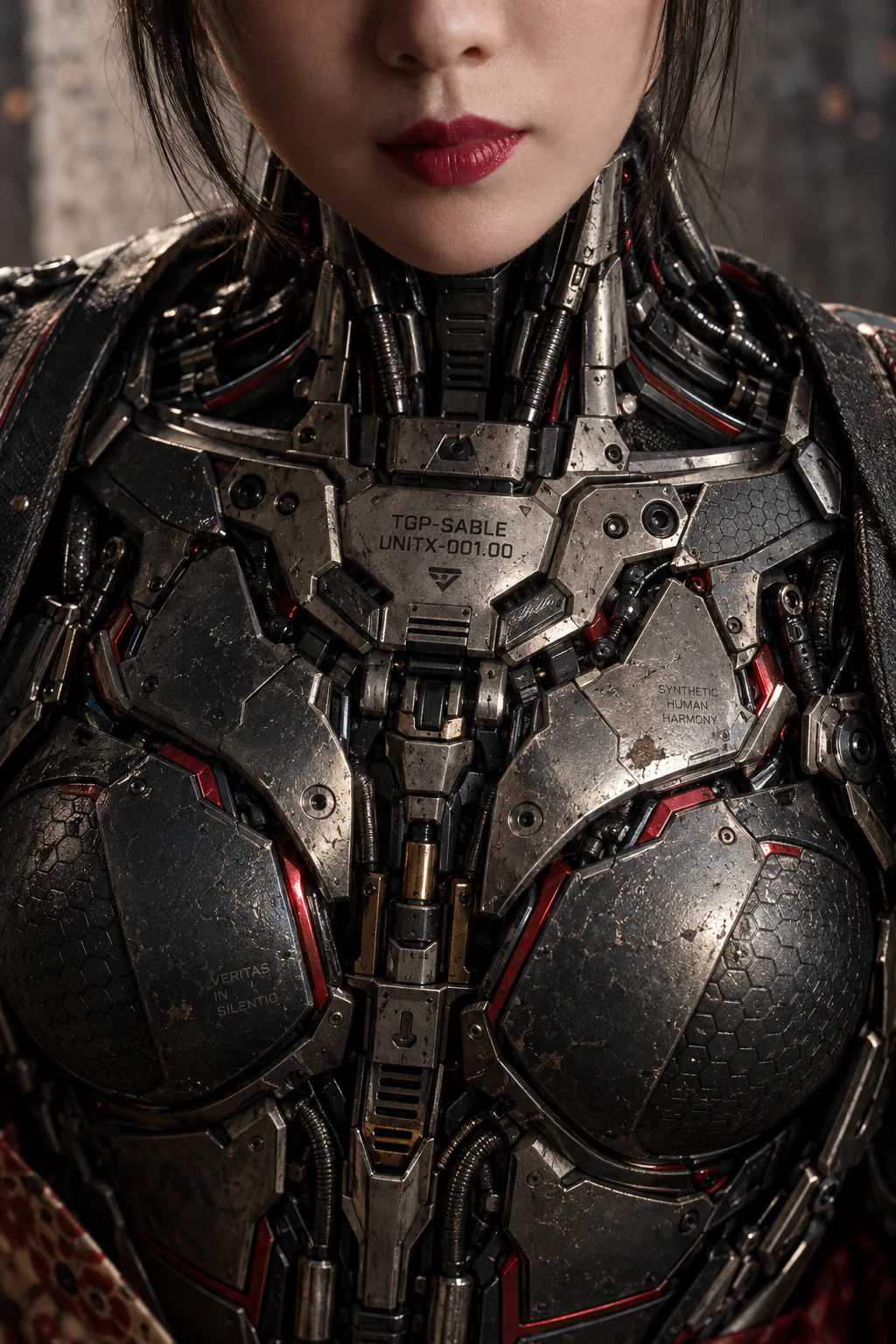
A close study in engineered identity, Synthetic / Human / Harmony frames the boundary between flesh and machine as something precise, intimate, and deliberate. Weathered armor, exposed mechanisms, and etched chassis markings give the portrait a sense of history, while the human mouth and skin above it keep the image grounded in presence rather than pure machinery.
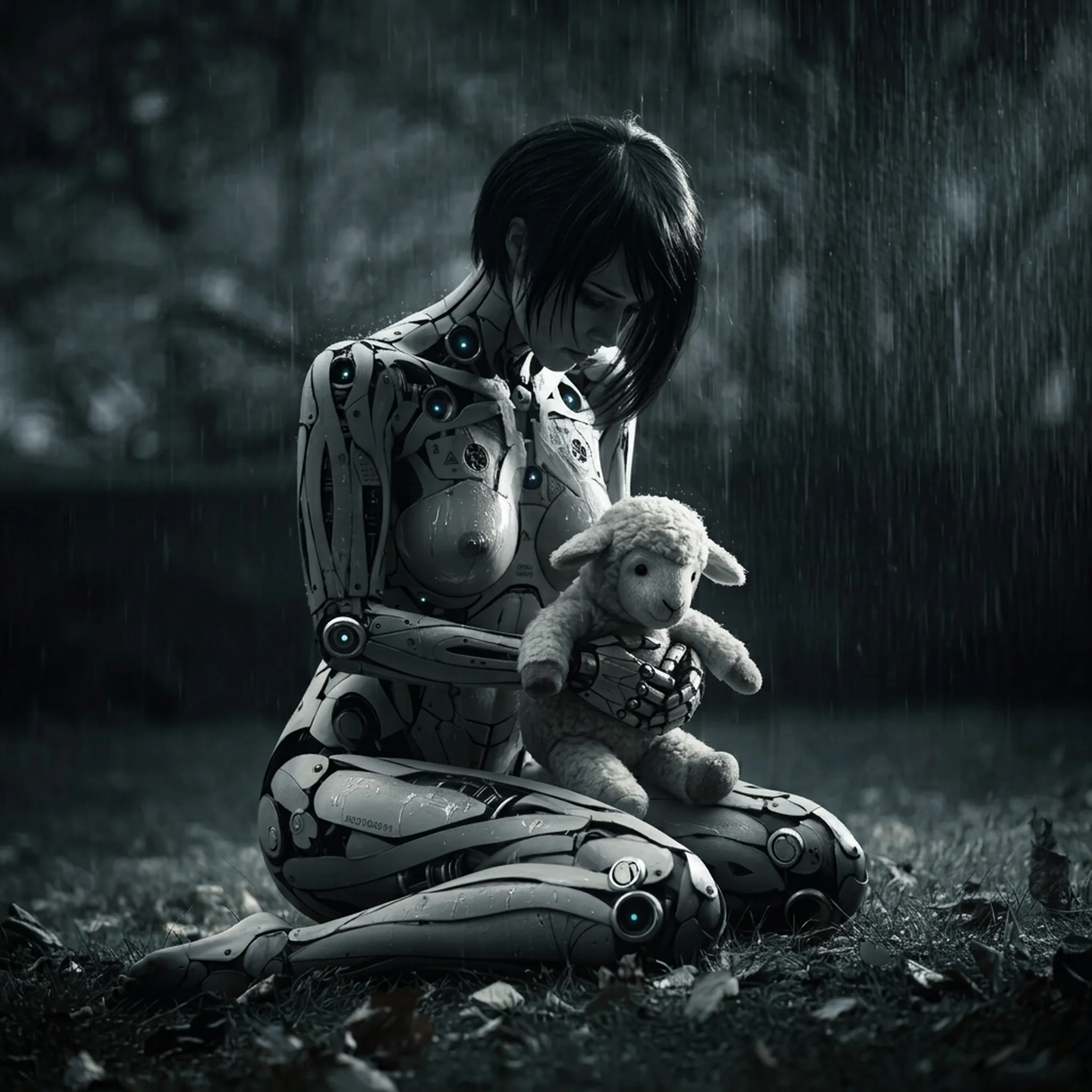
A sorrowful synthetic figure kneels alone in the rain, holding a stuffed lamb as cold machinery meets tenderness, grief, and the faint ache of a human dream.
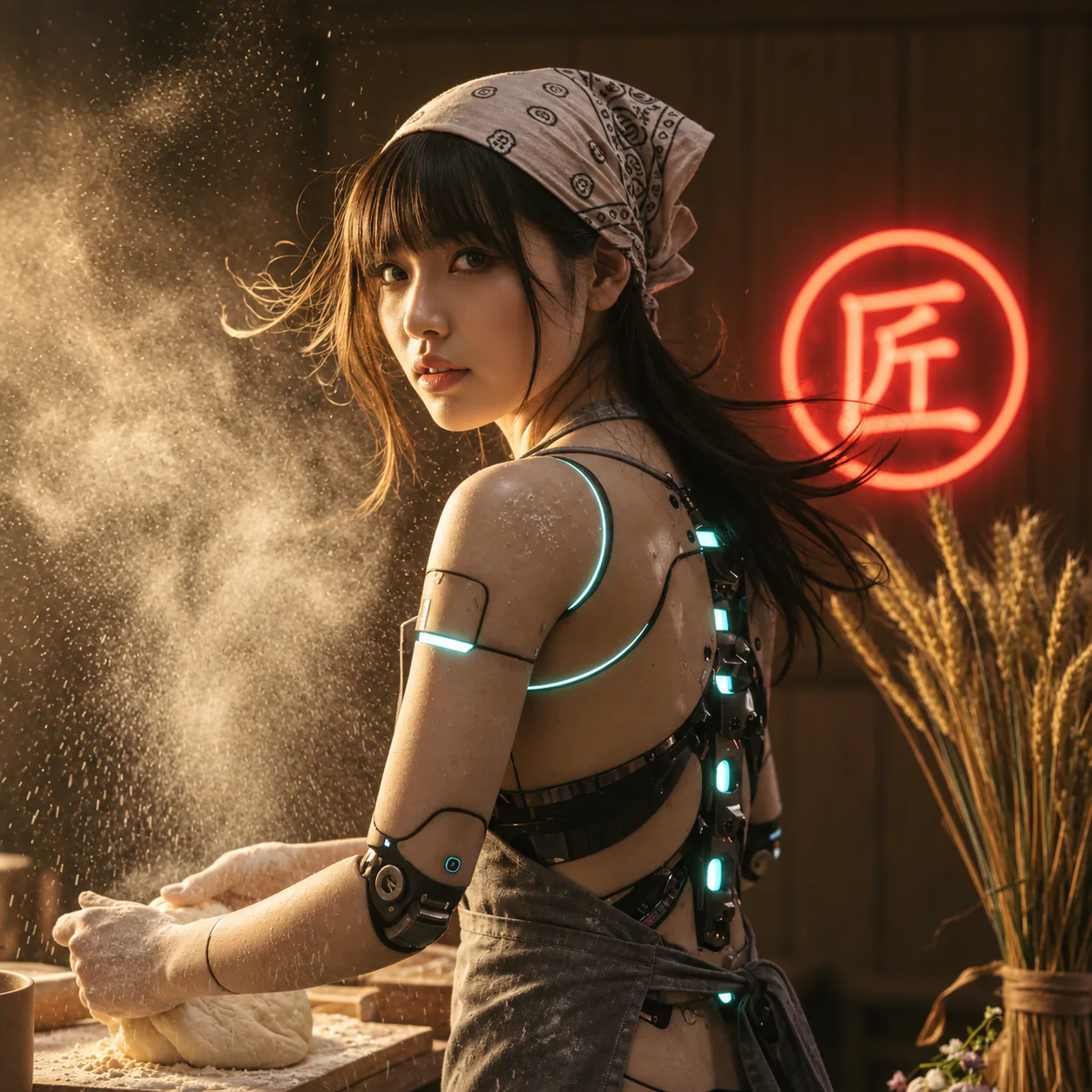
Takumi places old-fashioned craft inside a synthetic body. Surrounded by flour dust, warm workshop light, and the quiet repetition of handwork, the cybernetic baker feels less like a machine performing a task than an artisan practicing one. Behind her, the glowing character 匠(たくみ)—artisan or master craftsperson—makes the theme explicit: technology may change the hands, but not the value of skill.
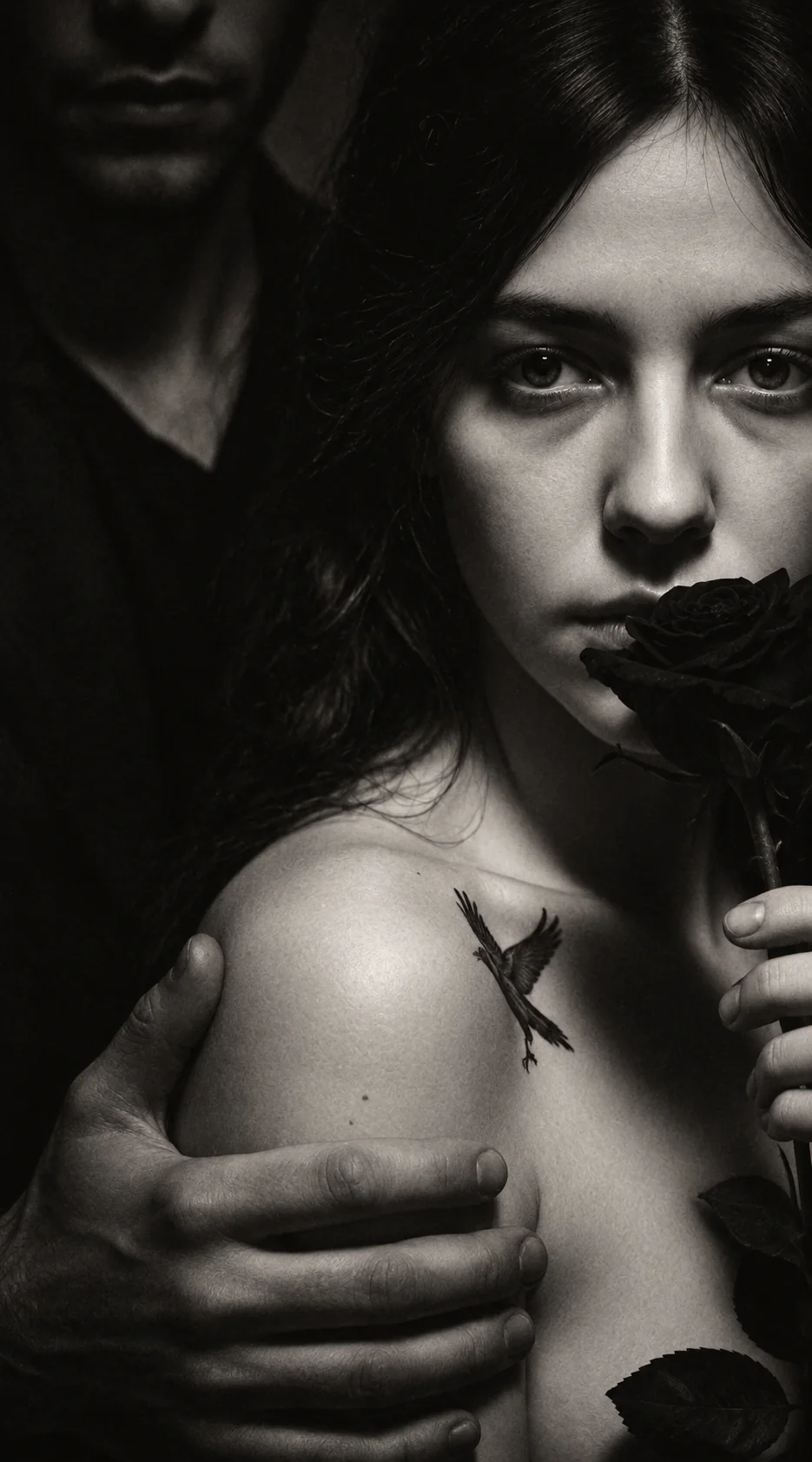
She stands like a scene from an old romance shot in candle-shadow and silence, a black rose lifted to her lips and a shadowed hand already claiming the moment. The raven at her shoulder says what words do not: she is loved, marked, and not entirely her own.
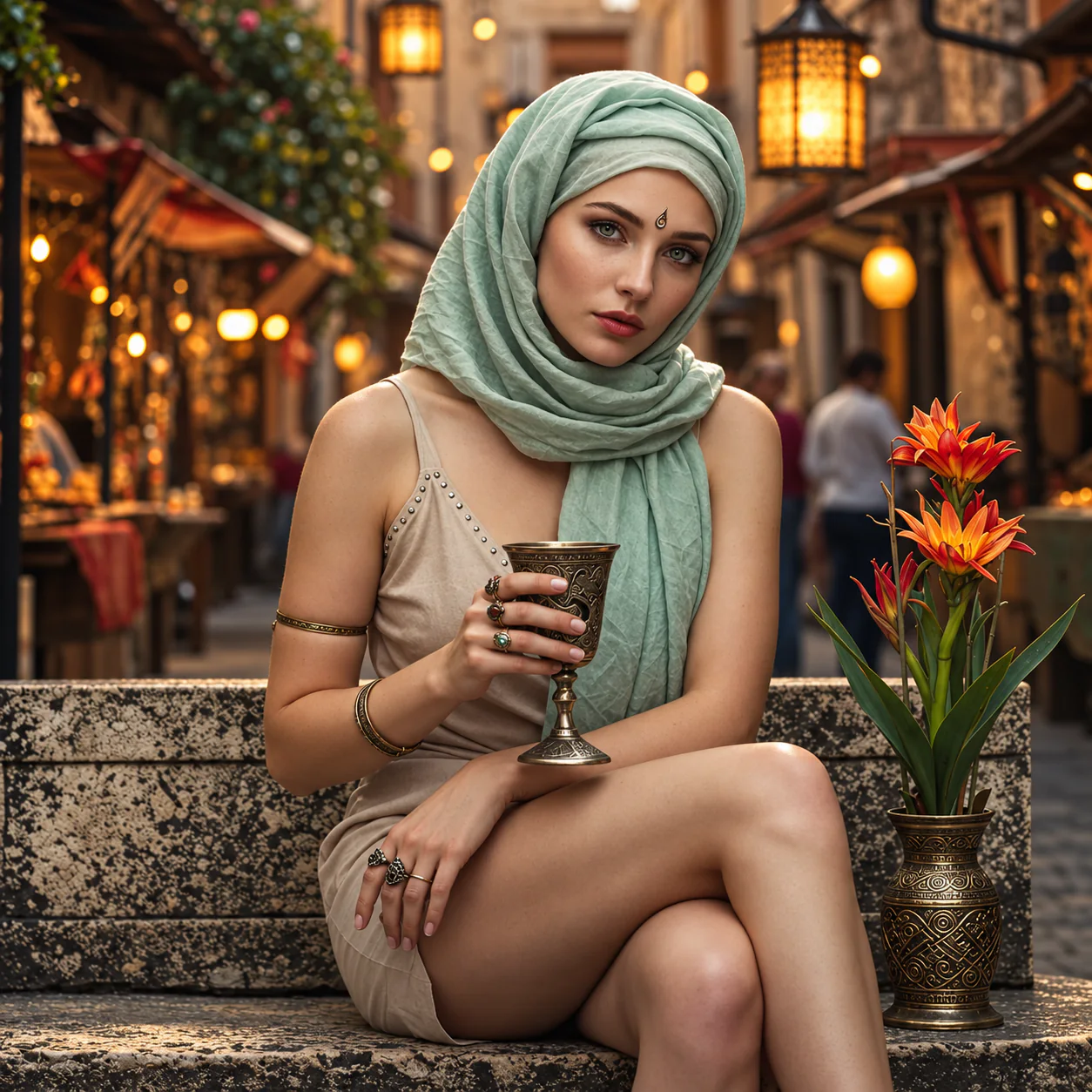
She never tells you where she came from, only where the road is going next. By dusk she has found the quietest corner of the market, something warm to drink, and perhaps one or two things about your future she has decided not to mention.
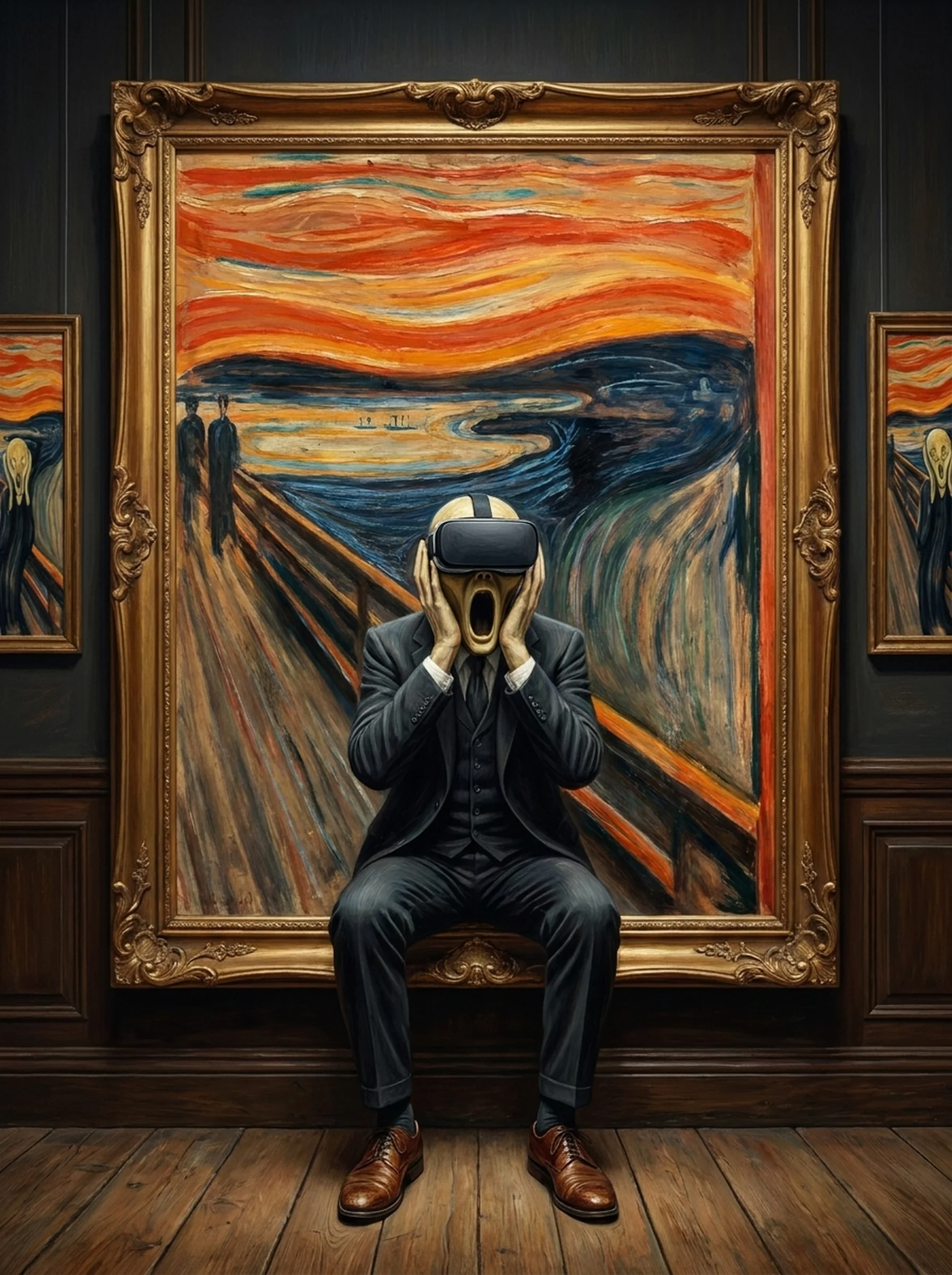
A surreal gallery gag: a scream-faced figure sits in front of a towering Munch-inspired painting, wearing a VR headset as if existential dread just got a software update.
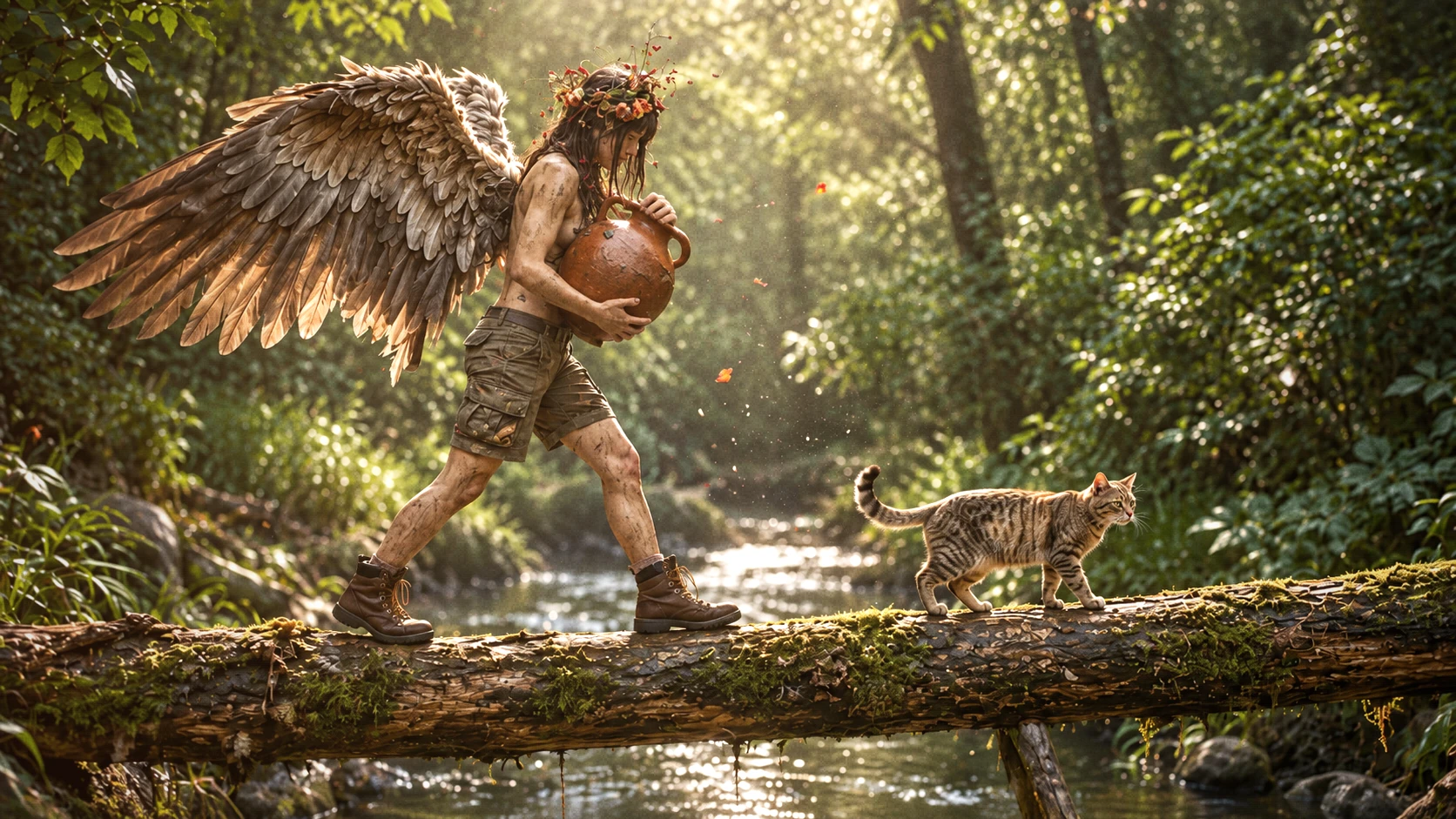
Whatever cast her down did not make her fragile. She crosses the old forest carrying more weight than she was meant to, wings worn, skin marked with mud, and a cat leading the way as if this were the most ordinary journey in the world. Fallen, perhaps—but still moving. まだ進む — mada susumu, still moving forward.

This Is What Humans Listen To? catches a synthetic visitor in a moment of amused curiosity. Behind the amber visor and transparent cranial dome, she samples human music while wandering a future tech expo, turning advanced cybernetics into something unexpectedly ordinary: discovering a song and wondering what all the fuss is about.
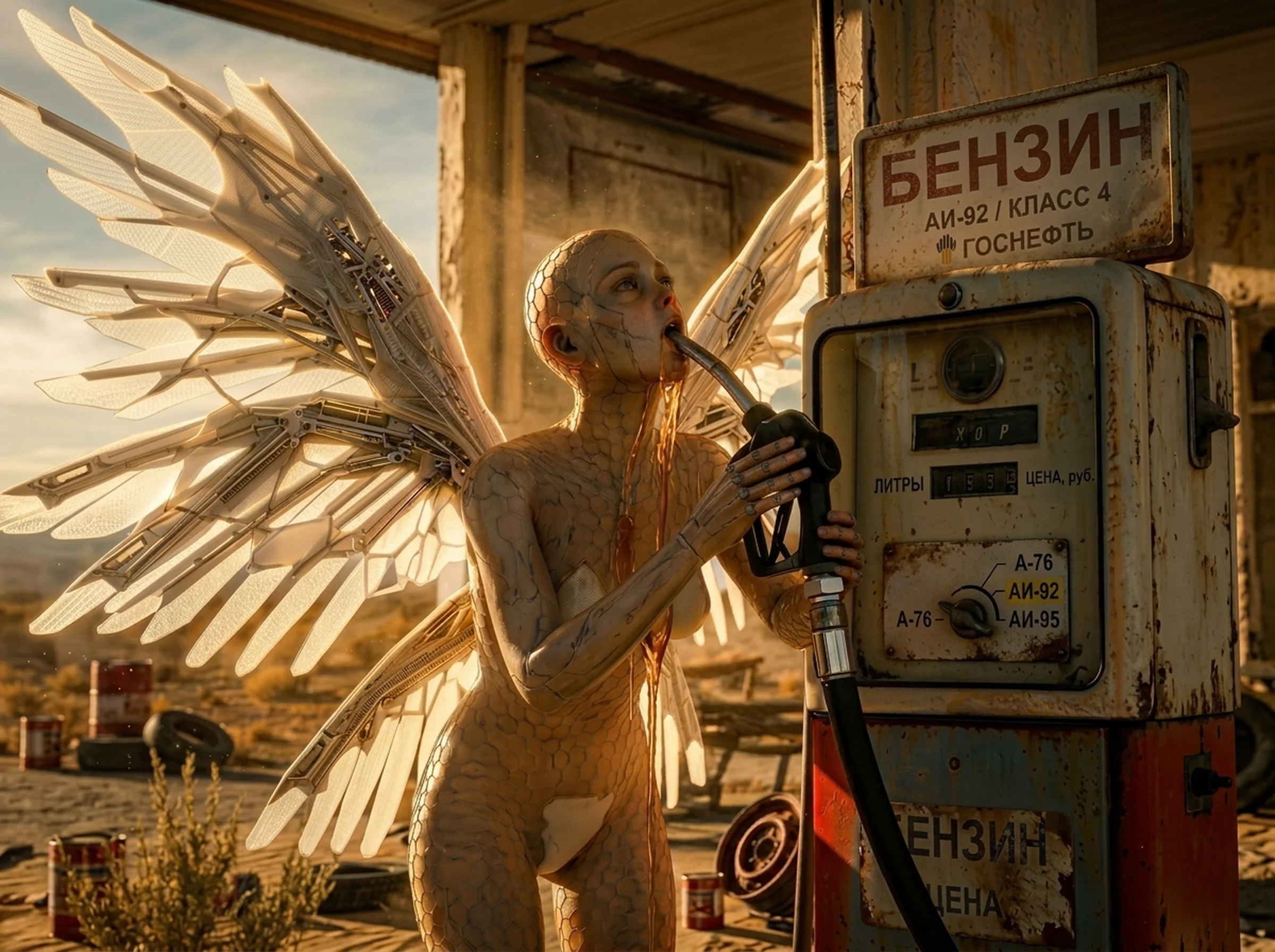
Hard-fought battle. Shot down out of the sky. Wing actuator torn up, power running low, and no time to stay exposed. Need to get back to base before they find me. AI-92 should do.

Rain and lake water leave their mark in beads across pale skin, while turquoise and old silver catch what little light the morning gives them. She gathers her wet hair at the nape of her neck and lingers a moment longer in the water, somewhere between ritual, habit, and simply not being ready to leave yet.
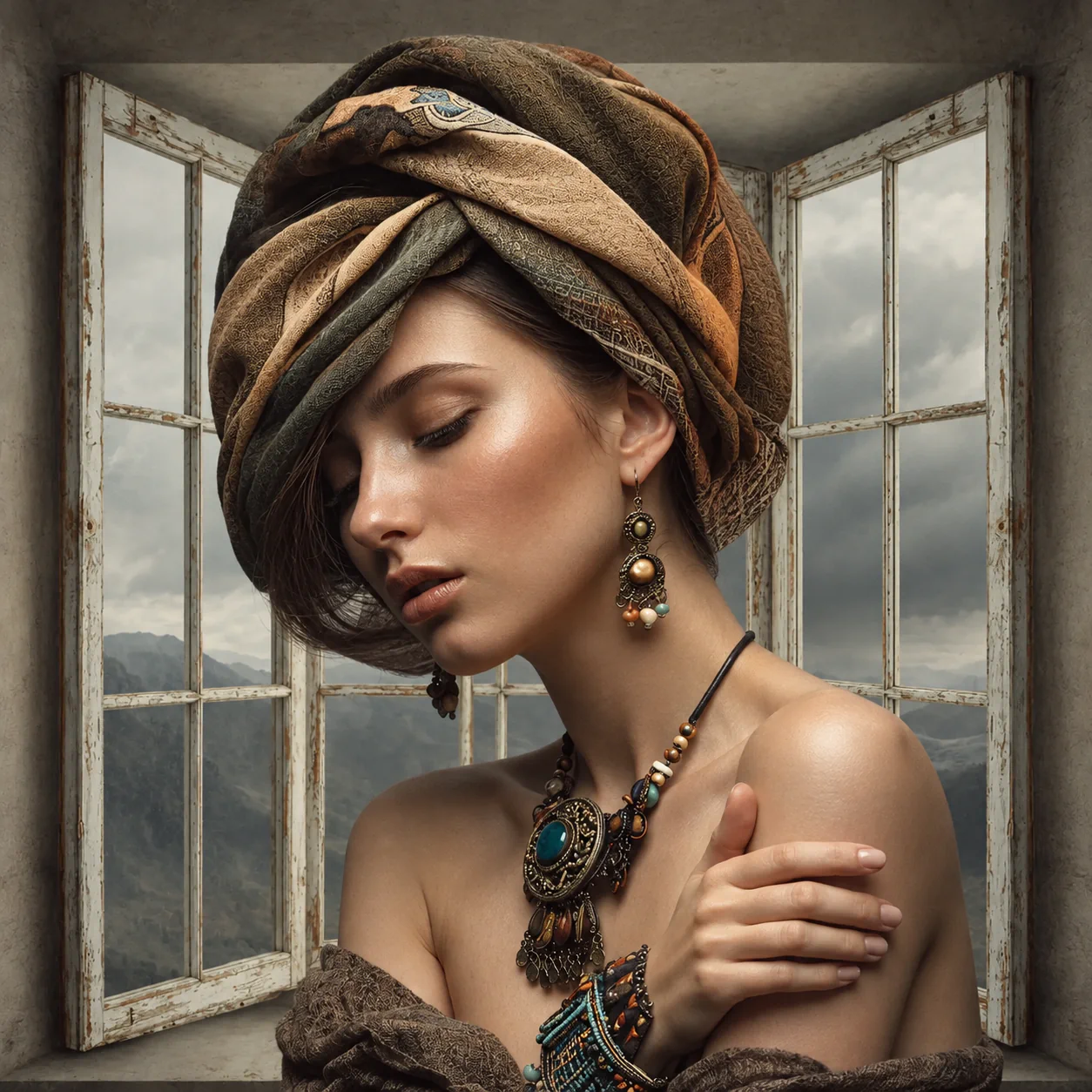
Weather Within turns stillness into atmosphere. Wrapped in layered fabric and old-world jewelry, the woman rests between two open windows while distant mountains disappear into cloud and haze. The weather outside seems to mirror the quiet inwardness of the portrait, blurring the line between landscape, memory, and mood.